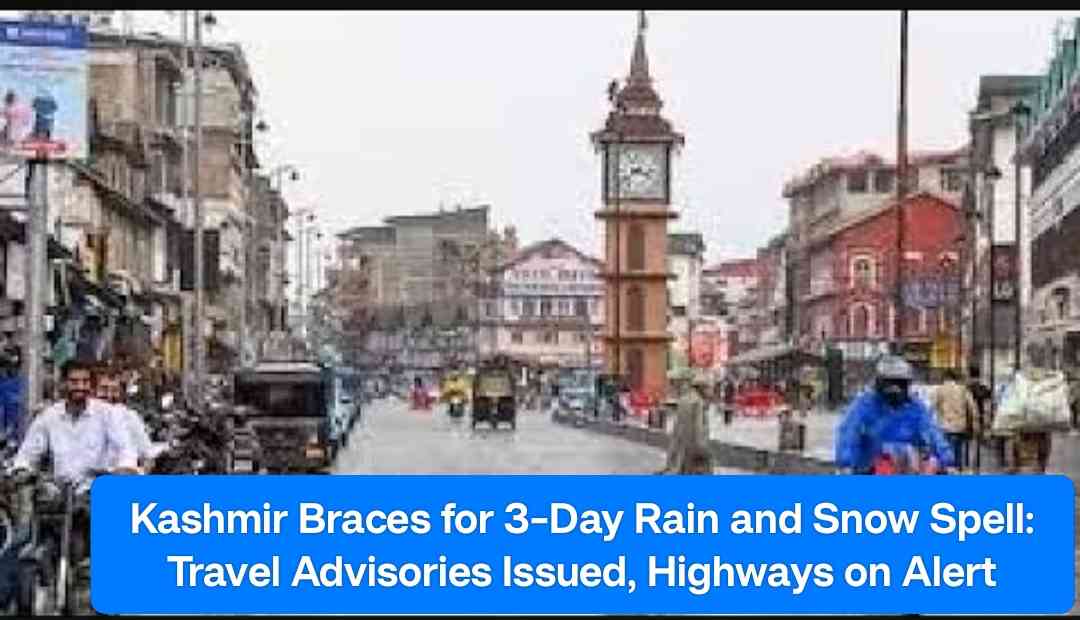
SRINAGAR, OCT 04 – Kashmir Braces for 3-Day Rain and Snow Spell.The Kashmir Valley is preparing for an intense three-day weather system bringing widespread rain and higher elevation snowfall from October 5 to October 7, marking one of the earliest winter weather events in recent years and prompting comprehensive safety preparations across the region.
Table of Contents
Detailed Weather Forecast and Meteorological Analysis
According to Dr. Mukhtar Ahmad, Director of the Meteorological Department (MeT), the weather system will impact the region with varying intensity across different areas. “From October 5 to 7, the region will experience generally cloudy skies with intermittent light to moderate rain, thunderstorms, and gusty winds reaching 40-50 km/h,” Dr. Ahmad told Rising Kashmir.
The precipitation pattern shows:
- Higher altitudes (above 3,000 meters): Light to moderate snowfall
- Middle reaches (2,000-3,000 meters): Mixed rain and snow
- Plains of Kashmir: Moderate to heavy rainfall
- Jammu Division: Heavy rainfall in isolated areas
Specific Impact Areas and Snowfall Predictions
The weather system is particularly significant for several key locations:
Heavy Snowfall Expected:
- Gulmarg (2,650m) – 15-25 cm snowfall
- Sonamarg (2,800m) – 20-30 cm snowfall
- Razdan Top (3,500m) – 25-35 cm snowfall
- Sinthan Top (3,700m) – 30-40 cm snowfall
- Zojila Pass (3,528m) – 35-45 cm snowfall
Temperature Projections Across Regions
- Srinagar plains: 4°C–5°C nighttime temperatures
- Gulmarg: -2°C to 3°C
- Pahalgam: 1°C to 6°C
- Jammu Division: 8°C–12°C
Critical Transportation Disruptions and Highway Status
Major Highway Closures Expected:
- Jammu-Srinagar National Highway (NH44): Potential closure due to landslides and shooting stones
- Srinagar-Leh Highway: Likely closure at Zojila Pass
- Mughal Road: Restricted to LMVs only
- Sinthan Top Road: Expected temporary closure
Current Traffic Management Measures
Traffic officials reported that Jammu-Srinagar NH-44 continues to experience slow movement at Tharad, Udhampur, due to single-lane movement and uneven road surfaces. “Commuters and goods carriers are advised to follow lane discipline and avoid unnecessary travel,” stated a traffic department spokesperson.
Official Advisories and Emergency Preparedness
The Jammu & Kashmir Emergency Relief Organization, under the Department of Disaster Management, Relief, Rehabilitation & Reconstruction, has activated emergency protocols following the IMD alert.
Key Advisories for Residents:
- Remain indoors during heavy precipitation and thunderstorms
- Prepare emergency kits including water, food, medicines, blankets, batteries
- Avoid non-essential travel, especially in high-altitude areas
- Secure rooftops, loose objects, and farm equipment
- Evacuate flood-prone areas if directed by authorities
Specific Weather Warnings
- Landslides and mudslides in vulnerable areas
- Rising water levels in rivers and streams
- Possible power outages due to gusty winds
- Communication disruptions in higher reaches
Agricultural Impact and Farmer Guidance
The Agriculture Department has issued critical guidance for farming communities:
Immediate Actions Required for Farmers:
- Suspend all harvesting operations from October 5-7
- Secure stored grains and agricultural produce
- Protect livestock from exposure to severe weather
- Postpone fertilizer application and field preparation
Government Response and Administrative Preparedness
Chief Minister Omar Abdullah has directed all administrative departments to maintain high alert status. “Our priority is the safety of every citizen. All district and divisional administrations must stay alert, ensure readiness of control rooms, and respond swiftly to any distress calls,” the CM stated during an emergency review meeting.
Administrative Measures Implemented:
- Divisional Commissioners activated emergency response teams
- Control rooms established in all districts
- Health departments and emergency services on standby
- Essential supplies being pre-positioned in vulnerable areas
Tourism Impact and Early Winter Season
The early weather system presents both challenges and opportunities for Kashmir’s tourism industry:
Positive Impacts on Tourism:
- Early snowfall boosts winter tourism prospects
- Ski resorts preparing for early season openings
- Increased tourist interest in snowfall experiences
Challenges for Tourism Sector:
- Potential travel disruptions for current tourists
- Accessibility issues to popular destinations
- Safety concerns for adventure tourism
Historical Context and Climate Patterns
Meteorologists note that this early-season significant snowfall is unusual but not unprecedented. “While October snowfall occurs periodically, this system’s intensity and duration are notable,” explained a climate scientist at the University of Kashmir. “It aligns with observed patterns of increasing weather variability in the region.”
Safety Guidelines for Specific Groups
For Tourists and Visitors:
- Check weather updates before traveling to higher elevations
- Carry adequate cold-weather gear
- Inform accommodation providers of travel plans
- Register with local tourism authorities when visiting remote areas
For Residents in Flood-Prone Areas:
- Identify evacuation routes in advance
- Keep important documents in waterproof containers
- Maintain emergency communication devices
- Monitor river levels and weather updates regularly
Infrastructure Readiness and Emergency Services
Essential services departments have implemented comprehensive preparedness measures:
Power Department Preparedness:
- Emergency crews positioned across all districts
- Backup generators tested and fueled
- Critical infrastructure prioritized for power restoration
Health Services Readiness:
- Emergency medical teams on standby
- Additional supplies of cold-weather related medications
- Ambulance services equipped for challenging conditions
Long-Term Implications and Climate Adaptation
Environmental experts emphasize the importance of adapting to changing weather patterns. “Early severe weather events highlight the need for robust infrastructure and community preparedness programs,” noted a disaster management specialist.
Real-Time Monitoring and Information Sources
Residents and tourists can access current information through:
- IMD Srinagar website and social media
- J&K Disaster Management Authority updates
- Local administration bulletins
- Designated emergency helpline numbers
Community Resilience and Preparedness
As Kashmir prepares for this significant weather event, the coordinated response between government agencies and community awareness demonstrates the region’s improving resilience to extreme weather. While the three-day system presents challenges, it also offers valuable insights for enhancing future emergency response capabilities.
Authorities emphasize that public cooperation is essential for minimizing risks. “By following advisories and preparing adequately, we can ensure everyone’s safety during this weather event,” concluded the Chief Executive Officer of the Emergency Relief Organization.
– Meteorological Department & Disaster Management Authorities