JKSSB Driver Syllabus 2026 PDF: Complete Exam Pattern, Subject-Wise Topics & Preparation Guide
The Jammu and Kashmir Services Selection Board (JKSSB) has prescribed a detailed syllabus for the post of Driver (Light Motor Vehicle/Heavy Motor Vehicle). Candidates preparing for upcoming JKSSB Driver examinations must understand the complete syllabus, exam pattern, marking scheme, and important topics to score well in the written t
Add Below the Introduction of the Article
Join our WhatsApp Channel for JKSSB, Government Jobs, Results, Admit Cards and Daily Updates:
Add
For more JKSSB recruitment notifications, syllabus updates, admit cards and results, visit:
Follow Times of Kashmir WhatsApp Channel for instant JKSSB and Government Job Alerts:
For
- WhatsApp Channel:
- JKSSB https://www.timesofkashmir.in/jkssb-2025-latest-recruitment-syllabus-results/
For the latest JKSSB recruitment notifications, syllabus updates, admit cards, and results, candidates can also visit the JKSSB information page:
Candidates can also join the Times of Kashmir WhatsApp Channel for instant JKSSB and government job updates:
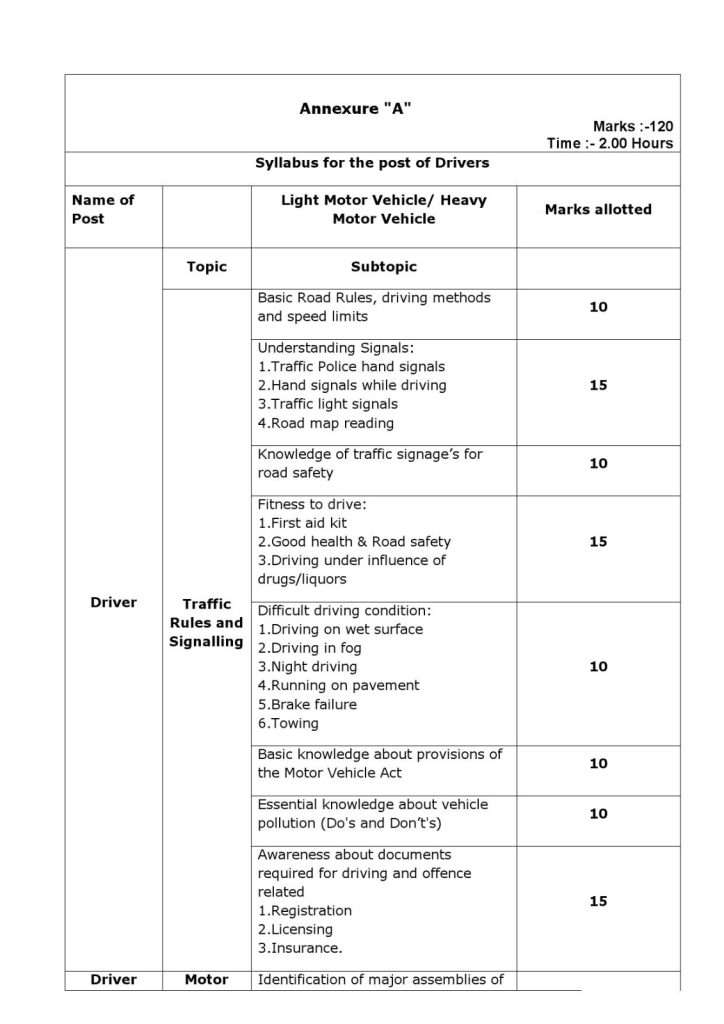
JKSSB Driver Exam Pattern 2026
| Particulars | Details |
|---|---|
| Post Name | Driver (LMV/HMV) |
| Total Marks | 120 |
| Duration | 2 Hours |
| Type of Examination | Objective Type |
| Subjects Covered | Traffic Rules, Road Safety, Motor Vehicle Knowledge, Vehicle Repair & Maintenance |
The written examination evaluates both theoretical and practical knowledge required for professional driving.
JKSSB Driver Syllabus 2026
The syllabus is divided into two major sections:
1. Traffic Rules and Signalling
Total Marks: 95
This section focuses on road safety, traffic regulations, legal provisions, and driving awareness.
Basic Road Rules, Driving Methods and Speed Limits
Marks: 10
Topics include:
- Fundamental road safety rules
- Safe driving practices
- Lane discipline
- Overtaking rules
- Speed restrictions
- Highway driving regulations
- Defensive driving techniques
- Parking regulations
- Pedestrian safety
Important Areas
- Maximum speed limits
- School zone restrictions
- Highway speed regulations
- Urban road driving norms
- Safe distance maintenance
Understanding Signals
Marks: 15
A driver must thoroughly understand different traffic signals and communication methods used on roads.
JKSSB Exam Preparation at Home — Ultimate 12-Week Study Plan
Topics Covered
1. Traffic Police Hand Signals
Candidates should know:
- Stop signal
- Proceed signal
- Turn left signal
- Turn right signal
- Slow down signal
2. Hand Signals While Driving
Knowledge regarding:
- Right turn signal
- Left turn signal
- Overtaking signal
- Stop signal
- Emergency warning signal
3. Traffic Light Signals
Understanding of:
- Red light
- Yellow light
- Green light
- Flashing signals
- Pedestrian crossing signals
4. Road Map Reading
Candidates should learn:
- Reading route maps
- Direction symbols
- Highway signs
- Distance indicators
- GPS and navigation basics
Knowledge of Traffic Signages for Road Safety
Marks: 10
This is one of the most important topics.
Types of Traffic Signs
Mandatory Signs
- Stop
- No Entry
- Speed Limit
- One Way
Cautionary Signs
- School Ahead
- Curve Ahead
- Narrow Bridge
- Men at Work
Informatory Signs
- Hospital
- Petrol Pump
- Parking Area
- Restaurant
Candidates should practice identifying traffic signs through images and road safety manuals.
Fitness to Drive
Marks: 15
This section tests awareness regarding health and safety while driving.
First Aid Kit
Candidates should know:
- Contents of first aid kit
- Emergency treatment
- Handling accident victims
- Basic first aid procedures
Good Health and Road Safety
Topics include:
- Physical fitness
- Eye vision standards
- Hearing ability
- Driver fatigue
- Rest requirements
Driving Under Influence of Drugs/Liquor
Important concepts:
- Effects of alcohol on driving
- Legal penalties
- Reaction time impairment
- Accident prevention
Difficult Driving Conditions
Marks: 10
Candidates should understand how to handle vehicles during challenging situations.
Driving on Wet Surface
- Hydroplaning prevention
- Reduced braking distance
- Tyre grip management
Driving in Fog
- Use of fog lights
- Speed reduction
- Safe following distance
Night Driving
- Headlight usage
- Visibility management
- Glare control
Running on Pavement
- Risks and precautions
- Legal implications
Brake Failure
Emergency actions:
- Engine braking
- Hand brake usage
- Safe stopping methods
Towing
Topics include:
- Towing procedures
- Safety measures
- Towing regulations
Motor Vehicle Act Provisions
Marks: 10
Candidates should study basic provisions of the Motor Vehicles Act.
Important topics:
- Driving licence rules
- Registration requirements
- Traffic violations
- Vehicle permits
- Road safety laws
- Penalties and fines
- Insurance regulations
- Fitness certificates
Vehicle Pollution (Do’s and Don’ts)
Marks: 10
Environmental awareness is increasingly important.
Do’s
- Maintain vehicle regularly
- Keep engine tuned
- Check emissions periodically
- Use recommended fuel
Don’ts
- Ignore smoke emissions
- Use adulterated fuel
- Delay servicing
- Remove pollution-control devices
Important Topics
- PUC Certificate
- Vehicle emissions
- Air pollution control
- Eco-friendly driving practices
Documents Required for Driving and Offence Related Matters
Marks: 15
Every driver must carry and understand essential documents.
Registration Certificate (RC)
Topics include:
- Vehicle ownership
- Registration process
- Renewal procedures
Driving Licence
Knowledge of:
- Licence categories
- Renewal process
- Learner’s licence
- Permanent licence
Insurance
Candidates should know:
- Third-party insurance
- Comprehensive insurance
- Claim procedures
- Insurance validity
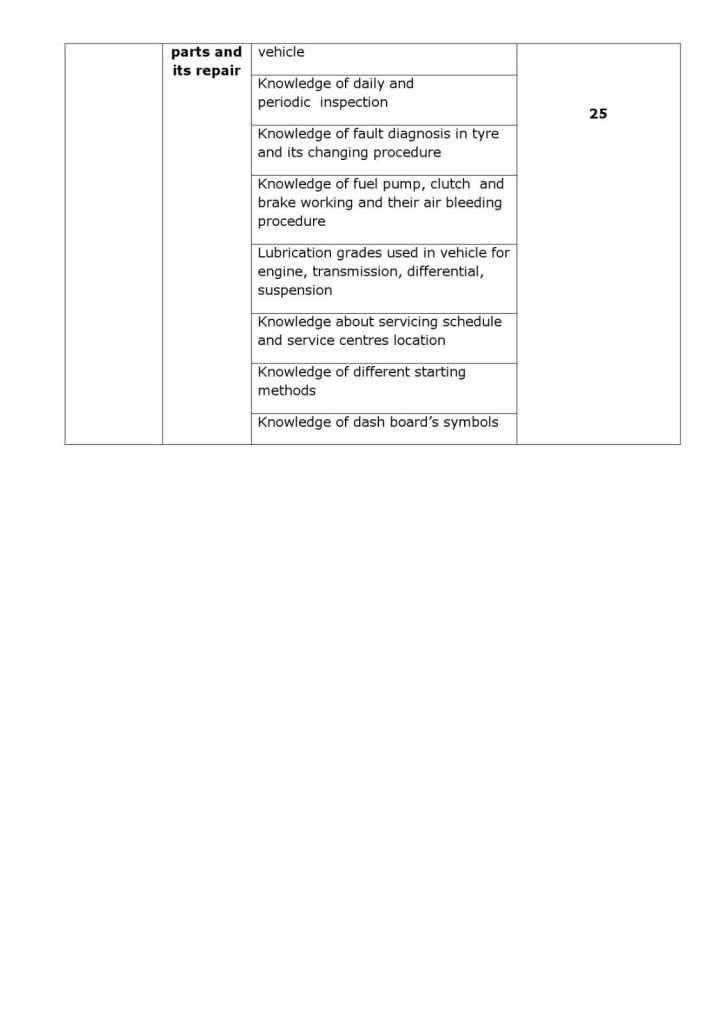
Driver – Motor (Parts and Its Repair)
Marks: 25
This section evaluates technical knowledge regarding vehicle systems and maintenance.
Identification of Major Assemblies of Vehicle
Candidates should know the major components of a vehicle.
Engine System
- Cylinder
- Piston
- Crankshaft
- Valves
Transmission System
- Clutch
- Gearbox
- Propeller shaft
Steering System
- Steering wheel
- Steering column
- Steering linkage
Braking System
- Brake pedal
- Brake drum
- Brake disc
Suspension System
- Shock absorbers
- Springs
- Suspension arms
Knowledge of Daily and Periodic Inspection
Vehicle inspection is a critical responsibility of drivers.
Daily Checks
- Engine oil level
- Coolant level
- Brake oil
- Tyre pressure
- Battery condition
Periodic Inspection
- Wheel alignment
- Brake inspection
- Engine tuning
- Suspension check
Knowledge of Fault Diagnosis in Tyre and Its Changing Procedure
Candidates should understand:
Tyre Problems
- Uneven wear
- Sidewall damage
- Low pressure
- Punctures
Tyre Changing Procedure
- Park safely
- Use hand brake
- Place wheel chocks
- Lift vehicle using jack
- Remove damaged tyre
- Install spare tyre
- Tighten wheel nuts properly
Fuel Pump, Clutch and Brake Working
Fuel Pump
Topics include:
- Fuel delivery system
- Fuel pressure
- Common fuel pump issues
Clutch System
Knowledge of:
- Clutch operation
- Clutch plate
- Pressure plate
- Clutch maintenance
Brake System
Candidates should understand:
- Hydraulic brakes
- Air brakes
- Brake fluid
- Brake maintenance
Air Bleeding Procedure
- Removal of air from brake lines
- Maintaining braking efficiency
- Safety precautions
Lubrication Grades Used in Vehicles
Important areas:
Engine Oil
- Viscosity grades
- Engine lubrication
Transmission Oil
- Gear lubrication
- Maintenance intervals
Differential Oil
- Function and replacement
Suspension Lubrication
- Greasing procedures
- Maintenance schedules
Servicing Schedule and Service Centre Knowledge
Candidates should know:
- Manufacturer service intervals
- Preventive maintenance
- Authorized service centres
- Service records
Different Starting Methods
Topics include:
Self Start
- Electric starting system
Kick Start
- Common in two-wheelers
Push Start
- Emergency starting procedure
Jump Start
- Battery assistance method
Dashboard Symbols
Frequently asked dashboard indicators include:
- Engine warning light
- Battery indicator
- Oil pressure warning
- Brake warning light
- ABS warning
- Seat belt reminder
- Temperature warning
- Fuel indicator
- Airbag warning
Candidates should memorize all commonly used dashboard symbols and their meanings.
Best Preparation Strategy for JKSSB Driver Exam
Focus on Traffic Rules
Nearly 95 marks are linked directly or indirectly to road safety, traffic signs, signals, and legal provisions.
Study Motor Vehicle Act
Learn basic traffic laws, penalties, licences, registration, and insurance requirements.
Practice Traffic Sign Recognition
Many questions are expected from road signs and traffic symbols.
Learn Vehicle Maintenance
Understand tyres, brakes, clutch systems, lubrication, and dashboard indicators.
Revise Previous Papers
Previous year questions help identify repeated topics and important areas.
Frequently Asked Questions (FAQs)
What is the total marks of JKSSB Driver written examination?
The written examination carries 120 marks.
What is the duration of the JKSSB Driver exam?
The examination duration is 2 hours.
Which section carries the highest weightage?
Traffic Rules and Signalling carries the highest weightage with 95 marks.
How many marks are allotted to Motor Vehicle Parts and Repair?
The Motor Vehicle section carries 25 marks.
Are traffic signs important for the JKSSB Driver exam?
Yes. Traffic signs, road safety symbols, and traffic signals are among the most important topics in the syllabus.
Where can I get latest JKSSB syllabus and recruitment updates?
Candidates can check:
and join:
for regular updates on JKSSB recruitments, syllabus changes, admit cards, answer keys, and results.
Tags: JKSSB Driver Syllabus 2026, JKSSB Driver Exam Pattern, JKSSB Driver PDF Syllabus, JK Driver Recruitment 2026, LMV Driver Syllabus, HMV Driver Syllabus, JKSSB Driver Written Test, Traffic Rules and Signalling Syllabus, JKSSB Driver Preparation Guide, JK Driver Exam Topics.