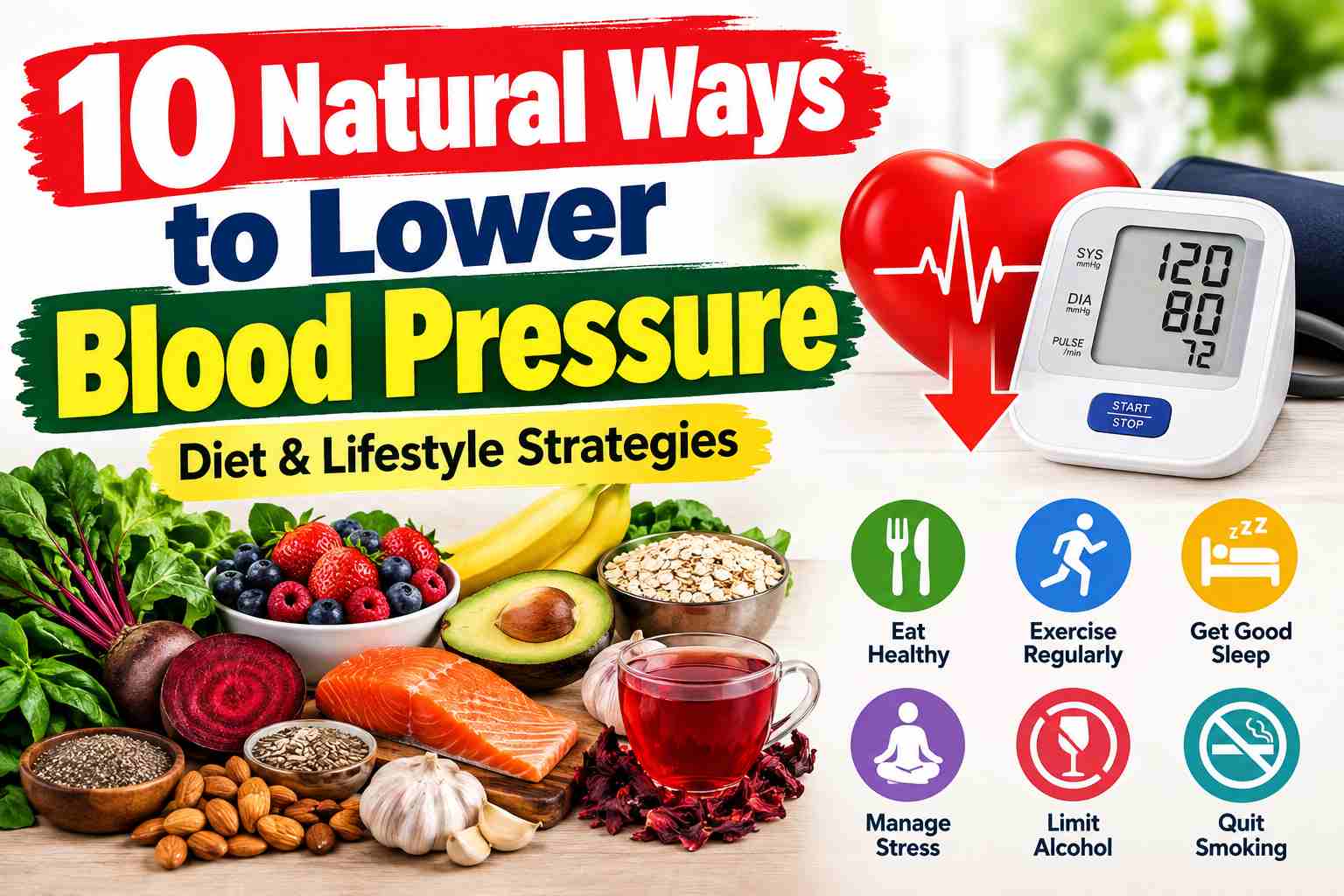
10 Natural Ways to Help Lower Blood Pressure: High blood pressure, also called hypertension, often develops without obvious symptoms. Yet over time, uncontrolled blood pressure can put extra strain on the heart and blood vessels and increase the risk of serious cardiovascular problems.
The good news is that everyday habits can make a meaningful difference. What you eat, how active you are, how much sodium you consume, your sleep, stress levels and alcohol intake can all influence blood pressure.
These strategies can help support healthier blood pressure naturally. However, they should not be used to stop or replace prescribed blood-pressure medication without medical guidance.
1. Cut Back on Sodium
One of the most effective dietary changes for blood-pressure control is reducing sodium.
Too much sodium can cause the body to retain more fluid, increasing the amount of blood circulating through the blood vessels. For people who are sensitive to sodium, this can contribute to higher blood pressure.
Start by limiting highly processed foods such as:
- Packaged soups
- Instant noodles
- Chips and salty snacks
- Processed meats
- Fast food
- Pickles and heavily salted foods
- Packaged sauces and seasoning mixes
The American Heart Association recommends no more than 2,300 mg of sodium per day, with an ideal goal of around 1,500 mg for most adults with high blood pressure, when appropriate.
Instead of relying heavily on salt, use garlic, lemon, herbs and spices to add flavor.
2. Eat More Potassium-Rich Foods
Potassium plays an important role in maintaining fluid balance and can help counter some of sodium’s effects on blood pressure.
Good food sources include:
- Bananas
- Oranges
- Avocados
- Potatoes
- Sweet potatoes
- Tomatoes
- Spinach
- Beans and lentils
- Yogurt
- Dried fruits
Rather than focusing on one “superfood,” aim to include several potassium-rich foods throughout your normal diet.
Important: People with kidney disease or certain medical conditions may need to restrict potassium. Some medications can also increase potassium levels, so speak with your healthcare professional before deliberately increasing potassium intake.
3. Follow a DASH-Style Eating Pattern
The DASH diet—Dietary Approaches to Stop Hypertension—is one of the best-established eating patterns for blood-pressure management.
It emphasizes:
- Vegetables and fruits
- Whole grains
- Beans and legumes
- Nuts and seeds
- Low-fat or fat-free dairy
- Fish and lean protein
At the same time, it limits excessive sodium, processed foods, sugary foods and foods high in saturated fat.
You don’t have to completely change your diet overnight. Start by adding more vegetables and replacing highly processed foods with minimally processed alternatives.
4. Eat Nitrate-Rich Vegetables
Certain vegetables naturally contain nitrates. Your body can convert dietary nitrates into nitric oxide, a compound involved in blood-vessel relaxation.
Examples include:
- Beetroot
- Spinach
- Arugula
- Lettuce
- Swiss chard
- Celery
Try adding leafy greens to meals or including beetroot as part of a balanced diet.
Beetroot and nitrate-rich foods may have a modest blood-pressure-lowering effect, but they should be viewed as part of an overall healthy diet rather than a treatment for hypertension.
5. Exercise Regularly
Physical activity is one of the most reliable lifestyle tools for improving blood pressure.
Regular aerobic activity can improve cardiovascular fitness and help your blood vessels function more efficiently.
Useful options include:
- Brisk walking
- Cycling
- Swimming
- Jogging
- Dancing
- Hiking
A practical target for many adults is at least 150 minutes of moderate-intensity aerobic activity each week.
You don’t need to complete it all at once. A brisk 30-minute walk on most days can be a simple starting point.
Strength training and certain isometric exercises may also contribute to better blood-pressure control.
6. Maintain a Healthy Weight
If you are overweight, even a relatively modest reduction in body weight can help lower blood pressure.
Excess body weight can increase the workload on the heart and may contribute to changes that raise blood pressure.
Instead of following extreme diets, focus on sustainable habits:
- Reduce sugary drinks
- Eat more vegetables
- Choose whole grains
- Control portion sizes
- Limit highly processed foods
- Stay physically active
The goal isn’t rapid weight loss. It’s building habits that you can maintain long term.
7. Choose Foods Rich in Magnesium
Magnesium is involved in normal muscle and blood-vessel function. A balanced diet can provide magnesium without necessarily requiring supplements.
Good sources include:
- Spinach and other leafy greens
- Almonds
- Pumpkin seeds
- Chia seeds
- Beans
- Lentils
- Oats
- Brown rice
- Whole grains
Rather than taking high-dose magnesium supplements specifically for blood pressure, prioritize magnesium-rich foods unless your healthcare professional recommends supplementation.
8. Eat Fatty Fish and Other Heart-Healthy Foods
Fatty fish provides omega-3 fatty acids, which are associated with cardiovascular benefits.
Good choices include:
- Salmon
- Sardines
- Mackerel
- Trout
- Tuna
Aim to include fish regularly as part of an overall heart-healthy diet.
You can also get healthy fats from foods such as walnuts, flaxseed, chia seeds and unsalted nuts.
If you’re considering high-dose omega-3 supplements specifically to lower blood pressure, discuss this with a healthcare professional first.
7 Signs Your Liver May Not Be Working Properly — Warning Changes You Shouldn’t Ignore
7 Signs Your Kidneys May Not Be Working Properly
Want Hair Growth Fast? Stop Making These 8 Mistakes That May Be Slowing Your Hair Growth
5 Signs Your Body May Be Low in Vitamin B12
9. Get Enough Sleep and Manage Stress
Blood pressure doesn’t depend only on what you eat.
Poor sleep and chronic stress can make healthy blood-pressure management more difficult.
Most adults should aim for around 7–9 hours of quality sleep each night.
For stress management, try simple techniques such as:
- Slow deep breathing
- Meditation
- Walking outdoors
- Gentle stretching
- Spending time in nature
- Taking regular breaks from screens
If you regularly snore loudly, wake up gasping or remain exhausted despite getting enough sleep, talk with a healthcare professional because sleep disorders can be associated with high blood pressure.
10. Limit Alcohol and Avoid Smoking
Alcohol can raise blood pressure, particularly when consumed regularly or in larger amounts.
Reducing alcohol intake—or avoiding it altogether—can therefore be an important part of blood-pressure management.
Smoking is also harmful to the cardiovascular system. Nicotine can temporarily raise blood pressure and heart rate, while smoking damages blood vessels over time.
If you smoke, quitting is one of the most important steps you can take for your overall cardiovascular health.
What About Garlic, Hibiscus Tea and Supplements?
You may have heard that garlic, hibiscus tea, beetroot and various herbal supplements can lower blood pressure.
Some research suggests certain products may produce modest reductions in blood pressure, but the evidence is generally less consistent than it is for established lifestyle interventions such as reducing sodium, exercising regularly and following a DASH-style eating pattern.
Supplements can also interact with prescription medicines.
For that reason, don’t assume that a “natural” product is automatically safe or effective. If you’re taking medication for hypertension or another health condition, discuss supplements with your healthcare professional before using them.
How Quickly Can Lifestyle Changes Lower Blood Pressure?
The answer varies from person to person.
Some people may see changes after making dietary and activity improvements, while others may need several weeks or longer to see a meaningful difference.
The important thing is consistency.
Instead of trying ten changes at once, start with a few high-impact habits:
Reduce sodium → eat more vegetables → exercise regularly → maintain a healthy weight → sleep well.
Then build from there.
Don’t Stop Blood-Pressure Medication on Your Own
Natural lifestyle changes can be powerful, but they don’t work as a substitute for medication for everyone.
If you’ve been prescribed blood-pressure medicine, do not stop taking it because your readings improve after changing your lifestyle. Your healthcare professional can determine whether your treatment needs to be adjusted.
Very high blood pressure can require prompt medical attention.
If you have a blood-pressure reading of 180/120 mmHg or higher, repeat the measurement after a brief rest. If it remains that high, seek medical advice promptly. If it occurs with symptoms such as chest pain, severe shortness of breath, weakness, numbness, vision changes or difficulty speaking, seek emergency medical care.
Bottom Line
Lowering blood pressure naturally is less about finding one miracle food and more about building several healthy habits.
Reducing sodium, eating more potassium-rich foods, following a DASH-style diet, exercising regularly, maintaining a healthy weight, getting enough sleep and limiting alcohol can all contribute to better blood-pressure control.
Foods such as beetroot, leafy greens, fatty fish, nuts and whole grains can fit into this approach, but no single food or supplement should be considered a replacement for appropriate medical treatment.
The best approach is consistent lifestyle improvement combined with regular blood-pressure monitoring and professional medical guidance when needed.
Medical Disclaimer
This article is for general educational purposes only and does not constitute medical advice, diagnosis or treatment. If you have high blood pressure, take prescription medication, have kidney disease, are pregnant, or have another medical condition, speak with a qualified healthcare professional before making significant dietary changes or taking supplements.