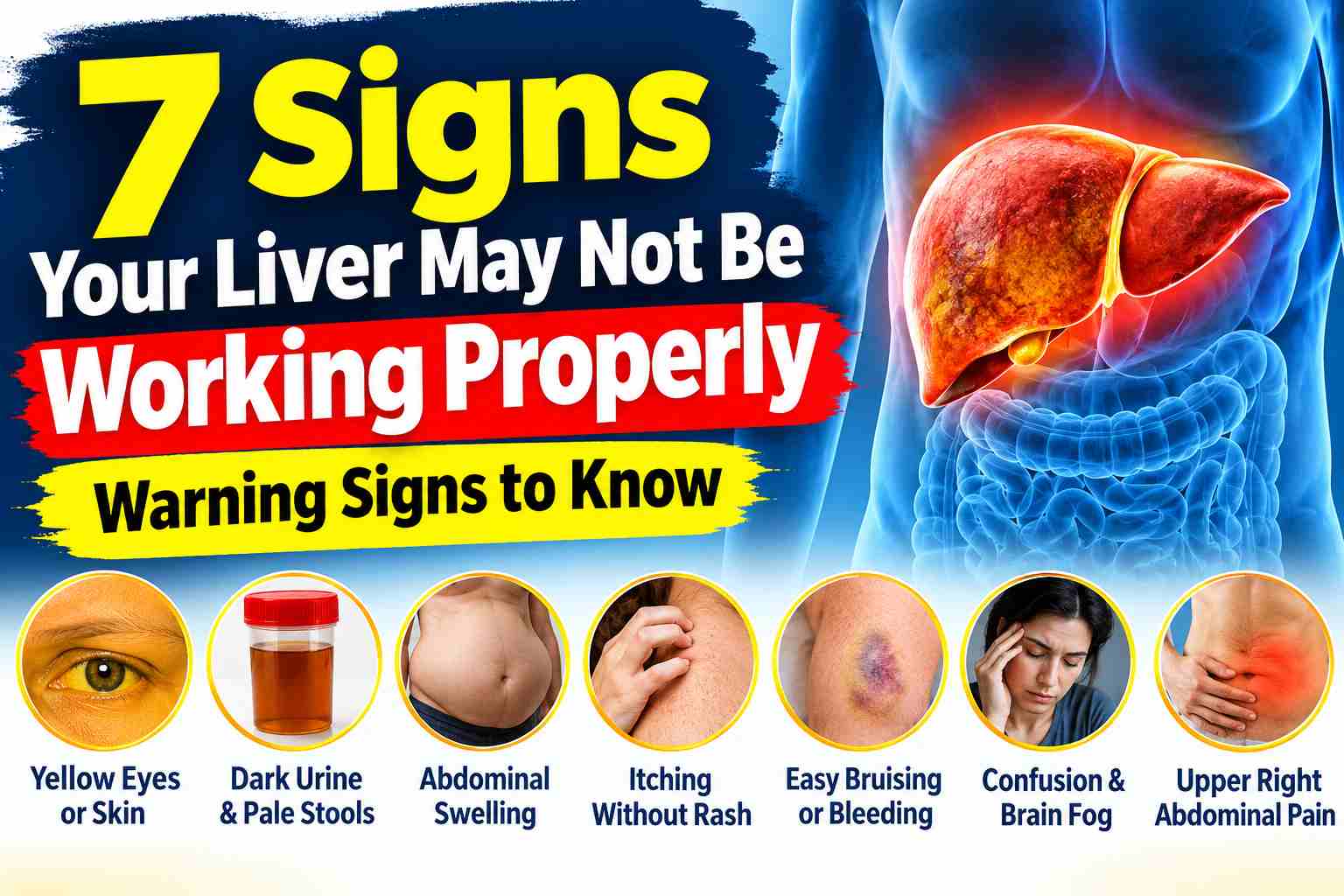
7 Signs Your Liver May Not Be Working Properly — Your liver works quietly in the background, performing hundreds of important jobs that keep the body functioning normally. It helps process nutrients, produces important blood proteins, handles bilirubin and bile, and plays a major role in processing substances the body needs to eliminate.
The problem is that liver disease can develop with few or no obvious symptoms, particularly in its earlier stages. Some people don’t realize there is a problem until liver damage has become more significant.
When symptoms do appear, they can sometimes look unrelated to the liver. Changes in your urine or stool, unexplained itching, swelling around the abdomen, unusual bruising, or changes in alertness may all deserve attention.
Here are seven signs that may indicate your liver isn’t functioning normally.
1. Yellow Eyes or Skin
One of the most recognizable signs of a liver or bile-flow problem is jaundice.
You may notice that the whites of your eyes become yellow or that your skin takes on a yellowish appearance. This happens when bilirubin, a yellow substance produced during the normal breakdown of red blood cells, builds up in the bloodstream.
A healthy liver normally processes bilirubin and helps remove it through bile. When liver function becomes impaired—or when bile flow is blocked—bilirubin can accumulate.
Jaundice can occur with several different conditions, so it does not automatically mean someone has liver failure. However, new yellowing of the eyes or skin should not be ignored.
Jaundice can also be accompanied by darker urine. In people with cirrhosis, the appearance of jaundice can indicate worsening liver function.
What to watch for
- Yellowing of the whites of the eyes
- Yellowish skin
- Dark urine
- Sometimes pale stools
- Increasing tiredness or weakness
If these changes appear suddenly or become pronounced, medical evaluation is important.
2. Your Urine Gets Dark and Your Stools Become Pale
Your bathroom habits can sometimes provide clues about what is happening with bile and bilirubin.
Dark urine can occur when bilirubin enters the urine. At the same time, stools may become unusually pale, gray, or clay-colored when normal bile flow into the intestine is reduced.
This combination is more meaningful than simply having dark urine after not drinking enough water.
For example, dehydration commonly makes urine darker, but it would not typically explain persistent clay-colored stools.
Liver and bile-duct problems can interfere with the normal movement and processing of bile, producing noticeable changes in urine and stool color.
Don’t ignore persistent changes
If unusually dark urine continues despite adequate hydration, or if stools repeatedly become pale or clay-colored—particularly when accompanied by yellow eyes, abdominal discomfort, or itching—talk with a healthcare professional.
These symptoms can also occur with problems outside the liver, so testing is needed to determine the cause.
3. Your Abdomen or Legs Begin to Swell
A growing or persistently swollen abdomen can sometimes be more than ordinary bloating.
In advanced liver disease, fluid can accumulate inside the abdomen. This is called ascites.
The abdomen may gradually become larger, feel heavy or tight, or cause a sensation of fullness. Some people may also develop swelling around the ankles, feet, or lower legs, known as edema.
Ascites is particularly important because it commonly occurs with advanced liver disease and cirrhosis. Increased pressure in the portal venous system and changes in the body’s handling of salt and water can contribute to fluid accumulation. Low albumin can also play a role.
How it can differ from ordinary bloating
Gas-related bloating often comes and goes.
Ascites tends to cause more persistent abdominal enlargement and may continue to worsen as fluid accumulates.
Large amounts of abdominal fluid can also cause:
- A feeling of pressure or fullness
- Rapid weight gain
- Shortness of breath
- Reduced appetite
- Leg or ankle swelling
New abdominal swelling should be medically assessed rather than assumed to be simple weight gain or bloating.
4. You Develop Persistent Itching Without an Obvious Rash
Itching is an easily overlooked symptom.
Some people with liver or bile-duct disorders develop persistent itching without an obvious skin rash. It may be widespread or particularly troublesome on areas such as the hands and feet.
The exact mechanisms vary depending on the underlying condition. Substances associated with impaired bile flow can contribute to itching, but the old explanation that bile salts simply “deposit under the skin” is an oversimplification.
Persistent itching has many possible causes, including skin disease, medication reactions, kidney problems and thyroid disorders.
However, unexplained itching becomes more concerning when it appears together with other possible liver-related changes such as jaundice, dark urine, pale stools, or abdominal swelling.
5. You Bruise or Bleed More Easily Than Usual
Another warning sign can be a noticeable change in the way your body handles minor injuries.
You may begin seeing bruises after relatively minor bumps or notice that small cuts seem to bleed for longer than they previously did.
The liver produces many proteins involved in normal blood clotting. Advanced liver dysfunction can reduce the body’s ability to produce these proteins. Liver disease can also be associated with low platelet levels, particularly when portal hypertension causes the spleen to enlarge.
That doesn’t mean every unexplained bruise points to liver disease.
Medications, nutritional problems, platelet disorders and other medical conditions can also cause easy bruising.
But a new pattern of unexplained bruising or bleeding deserves attention, especially if it occurs together with other symptoms.
6. You Develop Confusion, Sleep Changes, or Trouble Concentrating
Changes in thinking are particularly important because they can signal a serious complication of advanced liver disease.
When severe liver dysfunction prevents the body from adequately handling certain substances, toxins can accumulate and affect brain function. This can contribute to hepatic encephalopathy.
Symptoms can include:
- Difficulty concentrating
- Confusion
- Changes in sleep patterns
- Personality or behavior changes
- Unusual drowsiness
- Problems with memory
- Slurred speech in more severe cases
This is not simply ordinary “brain fog.” Hepatic encephalopathy is generally associated with significant liver dysfunction and can become dangerous if it progresses.
Sudden confusion, severe drowsiness, difficulty staying awake, or major changes in behavior should receive urgent medical attention.
7. Persistent Upper-Right Abdominal Discomfort
The liver is located primarily in the upper-right portion of the abdomen, beneath the diaphragm.
Some people with liver disease develop discomfort, pressure, or a feeling of fullness in this area. NIDDK lists mild pain or discomfort over the liver area among possible symptoms of cirrhosis, while fatty liver disease can also cause upper-right abdominal discomfort in some people.
However, this symptom is not specific to the liver.
Gallbladder disease, stomach problems, muscle injuries, intestinal conditions and other problems can cause pain in the same region.
That’s why persistent upper-right abdominal discomfort should not be used as a self-diagnosis for liver disease.
The pattern becomes more important when the discomfort occurs alongside other changes such as jaundice, unexplained weight loss, itching, swelling, or abnormal blood-test results.
Why Liver Disease Can Be Difficult to Detect
One of the biggest challenges with liver disease is that symptoms may appear late.
A person can have a liver condition without obvious warning signs. This is particularly important with conditions such as metabolic dysfunction-associated steatotic liver disease (MASLD), formerly called nonalcoholic fatty liver disease, which can have few or no symptoms.
As liver damage progresses, inflammation and scarring can interfere with normal liver function.
Cirrhosis is the advanced stage of chronic liver scarring. It can result from several causes, including chronic viral hepatitis, long-term alcohol-related liver disease and metabolic liver disease.
That is why waiting for dramatic symptoms isn’t a good strategy for people who have known risk factors.
What Can Cause Liver Damage?
Liver disease has many possible causes.
Common causes include:
- Metabolic dysfunction-associated steatotic liver disease
- Long-term excessive alcohol use
- Chronic hepatitis B or hepatitis C
- Certain autoimmune liver diseases
- Some medications and toxic exposures
- Inherited conditions
- Other disorders affecting the liver or bile ducts
A person can also have more than one risk factor at the same time.
Importantly, having one risk factor does not mean you have liver disease.
How Is Liver Disease Checked?
Symptoms alone cannot tell you whether your liver is healthy.
A healthcare professional may review your medical history, medications, alcohol intake, metabolic risk factors and symptoms. Depending on the situation, evaluation can include blood tests and imaging.
Blood tests may help identify evidence of liver injury or impaired liver function, while imaging or specialized tests can help assess the liver’s structure and stiffness.
In people with suspected or established cirrhosis, doctors may use additional testing to determine disease severity and monitor complications.
So if you have several persistent symptoms, don’t rely on an online symptom list to determine the diagnosis. Get evaluated.
When Should You Seek Urgent Medical Care?
Some symptoms associated with advanced liver disease require immediate attention.
Seek emergency medical care if you experience:
- Vomiting blood
- Black, tar-like or bloody stools
- Sudden confusion or severe drowsiness
- Severe or rapidly worsening abdominal swelling
- Abdominal swelling accompanied by fever, significant pain or confusion
- Severe abdominal pain
Bleeding from enlarged veins in the digestive tract can be life-threatening, while fever, abdominal pain and confusion in someone with ascites can indicate infection.
The Bottom Line
Liver disease doesn’t always announce itself with obvious symptoms. In many cases, early disease can remain silent.
But changes such as yellow eyes or skin, persistent dark urine or pale stools, abdominal or leg swelling, unexplained itching, unusual bruising, changes in thinking, and persistent upper-right abdominal discomfort should not automatically be dismissed.
None of these symptoms proves that your liver is damaged. Many can occur because of other conditions.
What matters is the pattern, persistence and combination of symptoms.
If something has changed and you cannot explain why, especially if several of these warning signs appear together, speaking with a healthcare professional is the safest way to find out what is actually happening.
This article is intended for general education and does not diagnose liver disease or replace professional medical advice.