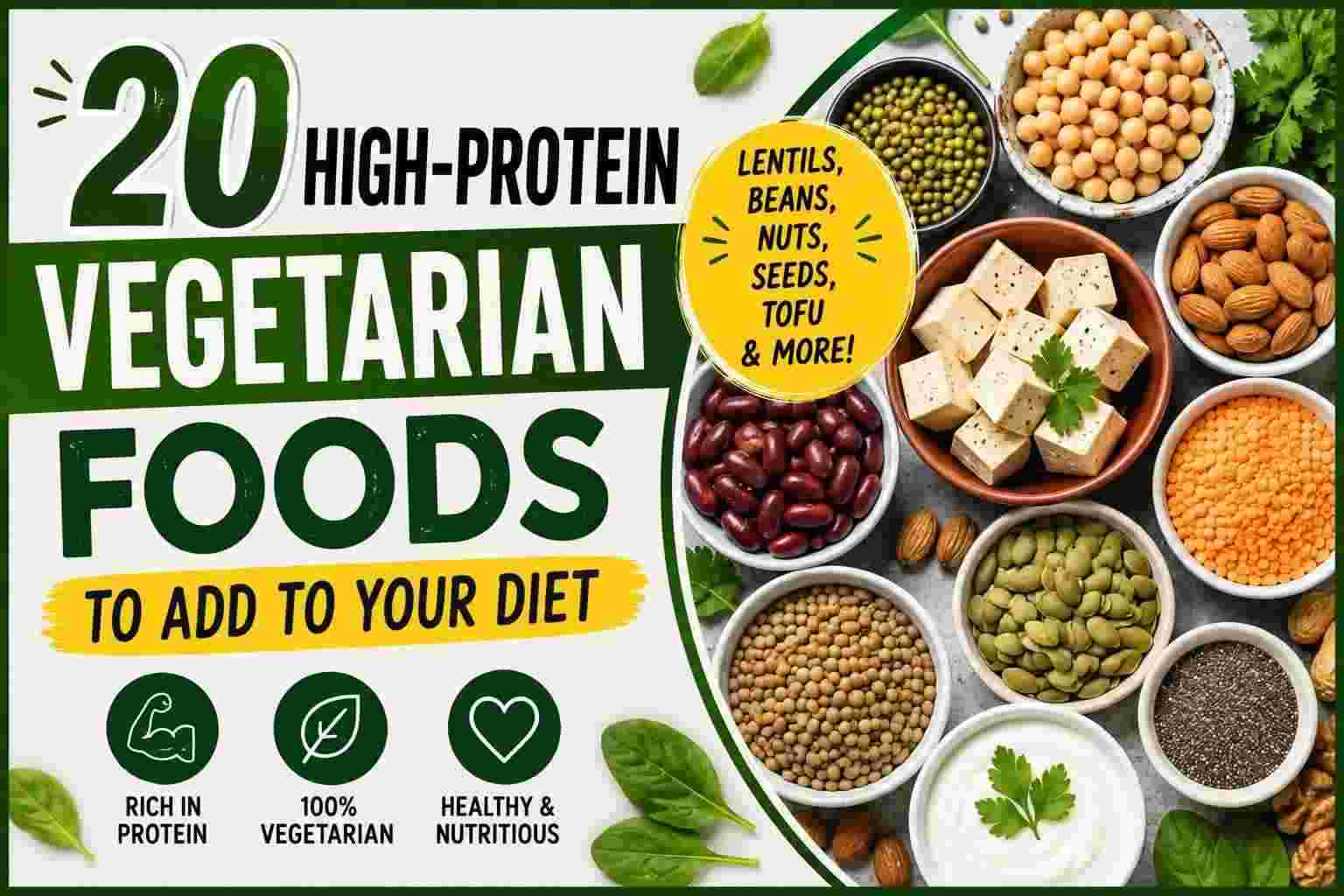
20 High-Protein Vegetarian Foods to Add to Your Diet
Getting enough protein does not require eating meat. A well-planned vegetarian diet can provide plenty of protein through foods such as lentils, beans, chickpeas, soy products, dairy, eggs, nuts, seeds and whole grains.
For people looking for high-protein vegetarian foods, the key is variety. Different foods provide different amounts of protein along with other nutrients such as fiber, iron, calcium, magnesium and healthy fats.
India’s National Institute of Nutrition highlights pulses such as lentils, green gram, black gram, chickpeas, kidney beans and soybeans as important protein sources in vegetarian diets. Nuts and seeds, including almonds, pistachios, walnuts, chia, pumpkin and sesame seeds, also contribute protein.
Here are 20 practical protein-rich vegetarian foods that can be included in breakfast, lunch, dinner or snacks.
1. Lentils
Lentils are one of the easiest vegetarian protein sources to add to everyday meals. They are also a source of fiber, iron and other minerals.
You can use red, green, brown or black lentils in dal, soups, curries and salads.
Easy idea: Have dal with rice or roti for a simple protein-rich meal.
2. Chickpeas
Chickpeas, also called chana or garbanzo beans, are versatile legumes that provide protein and fiber.
They can be used in curries, salads, hummus, chaat and roasted snacks.
Easy idea: Add boiled chickpeas to a vegetable salad or make chana masala with roti.
3. Kidney Beans
Kidney beans, commonly known as rajma, are another useful vegetarian protein source.
They work particularly well in Indian meals and can be combined with rice, roti or other whole grains.
Easy idea: Prepare rajma with vegetables and serve it with rice.
4. Soybeans
Soybeans are among the most protein-rich plant foods and can be eaten in several forms.
They can be used as cooked soybeans, soy chunks, tofu, tempeh or other soy products.
The USDA includes soy products among the major vegetarian choices in the Protein Foods group.
Easy idea: Add cooked soybeans to salads or vegetable dishes.
5. Tofu
Tofu is made from soybeans and is a convenient vegetarian protein option.
It can be grilled, stir-fried, baked or added to curries and soups.
Easy idea: Cook tofu with vegetables and spices for a quick protein-rich dinner.
6. Tempeh
Tempeh is another soy-based food made from fermented soybeans.
It has a firm texture and can be sliced, grilled, pan-cooked or added to stir-fries.
Easy idea: Use sliced tempeh in a vegetable stir-fry or grain bowl.
7. Green Gram (Moong)
Green gram, or moong, is widely used in Indian cooking and can contribute protein, fiber and other nutrients to the diet.
It can be prepared as dal, sprouts or a savory dish.
Easy idea: Make moong dal or add cooked moong to a salad.
8. Black Gram (Urad Dal)
Black gram, commonly called urad dal, is another traditional pulse used in Indian diets.
It is used in dishes such as dal, idli and dosa batter.
Easy idea: Include urad dal-based foods as part of a varied vegetarian diet.
9. Peas
Green peas provide protein along with fiber and other nutrients.
They can easily be added to vegetable dishes, pulao, soups, curries and salads.
Easy idea: Add peas to mixed-vegetable dishes or make a pea-based soup.
10. Paneer
Paneer is a popular vegetarian dairy food and provides protein as well as calcium.
It can be used in curries, grilled dishes, wraps and salads.
Easy idea: Add paneer cubes to a vegetable stir-fry or prepare a simple paneer curry.
For people who consume dairy, yogurt, milk, cheese and cottage cheese are also recognized as vegetarian protein sources.
11. Greek Yogurt
Greek yogurt can provide a convenient protein-rich option, particularly at breakfast or as a snack.
Choose plain varieties when possible and add fruit, nuts or seeds for additional nutrients.
Easy idea: Combine plain Greek yogurt with fruit and chia seeds.
12. Cottage Cheese
Cottage cheese is another dairy-based source of protein.
It can be eaten on its own, added to salads or used in sandwiches and wraps.
Easy idea: Combine cottage cheese with vegetables and whole-grain toast.
13. Milk
Milk provides protein along with nutrients such as calcium.
It can be included as a drink, added to oatmeal or used in smoothies.
Easy idea: Make a breakfast smoothie using milk, fruit and oats.
14. Peanuts
Peanuts are a convenient source of plant protein and healthy fats.
They can be eaten roasted, added to dishes or used as peanut butter.
Easy idea: Spread natural peanut butter on whole-grain toast or add roasted peanuts to a salad.
15. Almonds
Almonds contain protein along with healthy fats, fiber and several micronutrients.
Because nuts are calorie-dense, a moderate portion can be a practical snack.
Easy idea: Add a small handful of almonds to breakfast or eat them as a snack.
16. Pumpkin Seeds
Pumpkin seeds are a useful way to add protein, healthy fats and minerals to meals.
They can be eaten as a snack or sprinkled over salads, yogurt, oatmeal and soups.
Easy idea: Add pumpkin seeds to a bowl of yogurt or oats.
17. Chia Seeds
Chia seeds contain protein as well as fiber and healthy fats.
They can be added to yogurt, oatmeal, smoothies and puddings.
Easy idea: Mix chia seeds into yogurt with fruit for a simple breakfast or snack.
18. Sesame Seeds
Sesame seeds provide protein and healthy fats and are commonly used in many cuisines.
Tahini, made from sesame seeds, can also be used in dips and sauces.
Easy idea: Sprinkle sesame seeds over vegetables, salads or stir-fries.
19. Quinoa
Quinoa is a protein-containing whole grain-like seed that can be used as an alternative to rice or other grains.
It works well in salads, bowls and cooked meals.
Easy idea: Use cooked quinoa as the base of a vegetable and bean bowl.
20. Oats
Oats are not usually considered a high-protein food on their own compared with legumes or soy foods, but they can contribute protein to a balanced diet.
Combining oats with milk or yogurt, nuts and seeds can make a more protein-rich breakfast.
Easy idea: Prepare oats with milk and top them with almonds, chia seeds and yogurt.
Best High-Protein Vegetarian Foods at a Glance
| Food | Easy way to eat it |
|---|---|
| Lentils | Dal, soup, salad |
| Chickpeas | Chana, hummus, salad |
| Kidney beans | Rajma, bean bowls |
| Soybeans | Curries, salads |
| Tofu | Stir-fries, curries |
| Tempeh | Grilled or stir-fried |
| Green gram | Dal, sprouts |
| Black gram | Dal, idli, dosa |
| Peas | Curries, pulao, soup |
| Paneer | Curry, grilled, wraps |
| Greek yogurt | Breakfast, snack |
| Cottage cheese | Salad, toast, wraps |
| Milk | Drink, oats, smoothies |
| Peanuts | Snack, peanut butter |
| Almonds | Snack, oatmeal |
| Pumpkin seeds | Yogurt, salads, oats |
| Chia seeds | Yogurt, smoothies |
| Sesame seeds | Salads, vegetables, tahini |
| Quinoa | Bowls, salads |
| Oats | Breakfast, overnight oats |
How to Get More Protein From a Vegetarian Diet
The easiest approach is to include a protein source at several meals instead of trying to get all your protein from one food.
For example:
Breakfast: oats + milk or yogurt + nuts and seeds
Lunch: dal + rice or roti + vegetables
Snack: roasted chickpeas or yogurt with seeds
Dinner: tofu, paneer or beans + vegetables + a grain
The Indian National Institute of Nutrition notes that combining cereals and pulses can improve the overall protein quality of a vegetarian diet.
You also do not need to eat only one type of protein food. Variety is useful because different foods provide different combinations of nutrients. Official nutrition guidance recommends a variety of protein foods, including beans, peas, lentils, nuts, seeds and soy products for vegetarian diets.
Are Vegetarian Foods Enough for Protein?
Yes. A varied vegetarian diet can provide adequate protein when enough appropriate foods and calories are consumed.
Vegetarian protein sources include legumes, soy products, nuts, seeds, whole grains, dairy products and eggs for people who include them in their diet.
People following a fully vegan diet should pay attention to nutrients that are less readily available from plant foods, particularly vitamin B12. Fortified foods can be useful sources of B12.
High-Protein Vegetarian Foods for Different Meals
For breakfast
Try:
- Oats with milk, yogurt, chia seeds and almonds
- Moong-based dishes
- Greek yogurt with fruit and seeds
- Whole-grain toast with peanut butter
For lunch
Try:
- Dal with rice or roti
- Rajma with rice
- Chickpea salad
- Paneer and vegetable dishes
For snacks
Try:
- Roasted chickpeas
- Yogurt with seeds
- Almonds
- Peanuts
- Pumpkin seeds
For dinner
Try:
- Tofu and vegetable stir-fry
- Lentil curry
- Chickpea curry
- Paneer with vegetables
- Quinoa and bean bowls
Tips for Choosing Healthy Vegetarian Protein Foods
Not every food marketed as “high protein” is automatically the healthiest choice.
When possible, choose minimally processed foods and vary your protein sources. For packaged vegetarian foods, check the nutrition label for added sodium, sugar and saturated fat.
For canned beans and legumes, choosing lower-sodium products or rinsing and draining them can help reduce sodium intake.
Nuts and seeds are nutritious but energy-dense, so portions matter.
If you eat dairy, lower-fat and lower-sugar options can be useful choices depending on your overall dietary needs.
High-Protein Vegetarian Foods for Breakfast
Breakfast is a good opportunity to include protein instead of relying only on tea, coffee or refined carbohydrates. Simple combinations such as oats with milk and seeds, Greek yogurt with nuts, moong-based dishes, or whole-grain toast with peanut butter can add protein to the first meal of the day.
Easy breakfast combinations
- Oats + milk + chia seeds + almonds
- Greek yogurt + fruit + pumpkin seeds
- Moong dal chilla + yogurt
- Whole-grain toast + peanut butter
- Vegetable poha + peanuts
- Idli or dosa + sambar
- Paneer and vegetable sandwich
The goal is not to make every breakfast extremely high in protein. Instead, include at least one meaningful protein-containing food and build a balanced meal around it.
High-Protein Vegetarian Foods for Lunch
Lunch can combine legumes or dairy with vegetables and grains to create a satisfying meal.
Some easy combinations include:
- Dal + rice + vegetables
- Rajma + rice + salad
- Chickpea curry + roti
- Paneer + vegetables + roti
- Tofu + vegetables + rice
- Moong dal + roti + salad
- Quinoa + chickpeas + vegetables
Combining different food groups can also make meals more varied and nutritionally balanced.
High-Protein Vegetarian Foods for Snacks
Snacks don’t have to be limited to biscuits or processed foods. Protein-containing vegetarian foods can make convenient alternatives.
Good options include:
- Roasted chickpeas
- Peanuts
- Almonds
- Pumpkin seeds
- Greek yogurt
- Cottage cheese
- Milk
- Chia pudding
For packaged snacks, check the nutrition label rather than assuming that a product advertised as “protein-rich” is automatically a healthy choice.
Follow Us On whatapp
High-Protein Vegetarian Foods for Dinner
Dinner can include legumes, soy foods, dairy or other protein-containing foods alongside vegetables and grains.
Try:
Dal and vegetables: A simple combination that works well with rice or roti.
Tofu stir-fry: Combine tofu with several vegetables and serve with rice or another grain.
Paneer and vegetables: Paneer can be combined with vegetables in a curry or grilled preparation.
Chickpea bowl: Combine chickpeas with vegetables, quinoa or another whole grain.
Rajma meal: Kidney beans can be served with rice and a side of vegetables.
15 Easy High-Protein Foods to Add to Your Diet: Breakfast, Snacks & Meals
How to Lose Belly Fat: A Science-Based Guide to a Slimmer, Healthier Waist
Vegetarian Protein Sources for Different Dietary Preferences
Not every vegetarian follows exactly the same diet.
Lacto-vegetarian
People who consume dairy can use foods such as:
- Milk
- Yogurt
- Paneer
- Cottage cheese
along with legumes, soy foods, nuts, seeds and grains.
Ovo-vegetarian
People who eat eggs can include eggs alongside plant-based protein sources.
Vegan
Vegans avoid dairy and eggs, so useful protein sources include:
- Lentils
- Chickpeas
- Beans
- Soybeans
- Tofu
- Tempeh
- Peas
- Nuts
- Seeds
Fortified foods can also be useful for nutrients such as vitamin B12.
How to Combine Vegetarian Foods for a Balanced Meal
A simple way to build a vegetarian meal is to combine:
Protein source + whole grain or other carbohydrate + vegetables + healthy fat
For example:
Dal + brown rice + vegetables + yogurt
or
Tofu + vegetables + rice + sesame seeds
or
Chickpeas + quinoa + vegetables + nuts
This approach gives you variety rather than depending on a single food for nutrition.
Are Plant-Based Protein Sources Healthy?
Many plant-based protein foods are naturally nutrient-dense and can provide protein together with fiber, vitamins and minerals.
Beans, lentils, peas and chickpeas are particularly useful because they provide both protein and fiber. Nuts and seeds provide protein along with unsaturated fats, while soy foods provide another versatile plant-based protein option.
However, vegetarian does not automatically mean healthy. Highly processed vegetarian foods can sometimes contain considerable amounts of sodium, added sugar or saturated fat. Reading the nutrition label can help when choosing packaged products.
High-Protein Vegetarian Foods on a Budget
You don’t need expensive specialty products to increase protein intake.
Affordable options can include:
- Lentils
- Chickpeas
- Kidney beans
- Moong dal
- Black gram
- Peas
- Peanuts
- Milk
- Eggs, for people who eat them
- Seasonal or locally available pulses
Cooking dried beans and lentils at home can also be economical compared with buying ready-to-eat meals.
How to Add More Protein to Everyday Meals
Small changes can increase the protein content of ordinary meals.
At breakfast: Add milk or yogurt to oats and sprinkle nuts or seeds on top.
At lunch: Add dal, chickpeas or beans to your regular meal.
For snacks: Replace some highly processed snacks with yogurt, roasted chickpeas, peanuts or nuts.
At dinner: Add tofu, paneer, lentils or beans to vegetable-based meals.
For smoothies: Use milk or yogurt and add nuts or seeds where appropriate.
High-Protein Vegetarian Foods: What to Remember
There is no single “best” vegetarian protein food. The most practical approach is to eat a variety of protein-containing foods throughout the week.
Legumes can form the foundation of many meals, while soy foods, dairy products, nuts, seeds and whole grains provide additional options.
If you’re trying to increase protein for a particular reason—such as sports training, pregnancy, weight management or a medical condition—your individual protein needs may be different. In those situations, a registered dietitian or healthcare professional can provide advice suited to your circumstances.
Final Takeaway
A vegetarian diet can include many nutritious sources of protein. Lentils, chickpeas, beans, soybeans, tofu, tempeh, paneer, yogurt, milk, peanuts, nuts and seeds can all be incorporated into everyday meals.
Rather than concentrating on one food, aim for variety and build balanced meals around different protein sources. This makes it easier to enjoy a nutritious vegetarian diet while keeping meals interesting and practical.
Frequently Asked Questions
What are the best high-protein vegetarian foods?
Some of the most useful vegetarian protein sources include lentils, chickpeas, beans, soybeans, tofu, tempeh, peas, dairy products, nuts and seeds.
Which vegetarian food is highest in protein?
Protein content varies considerably by food and serving size. Soy foods such as tofu, tempeh and soybeans are among the more concentrated plant-based options, while legumes, nuts and seeds can also make substantial contributions.
How can vegetarians get enough protein?
Eat a variety of protein-containing foods throughout the day, including lentils, beans, chickpeas, soy foods, nuts, seeds, dairy products and whole grains. A varied diet is more useful than relying on one food.
Are lentils a good source of protein?
Yes. Lentils are an important vegetarian protein source and also provide fiber and several vitamins and minerals. They are commonly used in Indian meals as dal.
Is paneer a good vegetarian protein source?
Yes. Paneer provides protein and calcium and can be included in a balanced vegetarian diet. Portion size and the overall fat content of the meal should also be considered.
Are nuts good sources of protein?
Yes. Peanuts, almonds and other nuts contain protein as well as fats and other nutrients. Because nuts are calorie-dense, moderate portions are generally practical.
Can vegetarians get enough protein without supplements?
Many people can meet their protein needs through a varied diet without protein supplements. The appropriate amount depends on factors such as age, body size, activity level and health status.
Final Takeaway
There are many high-protein vegetarian foods that can be included in everyday meals. Lentils, chickpeas, beans, soybeans, tofu, paneer, yogurt, nuts, seeds and whole grains all offer useful ways to increase protein intake.
Instead of depending on one food, build variety into your meals. Combining pulses with grains, adding nuts or seeds to breakfast, and including foods such as tofu, paneer or beans at lunch and dinner can make a vegetarian diet more protein-rich and satisfying.
For people with specific medical conditions, pregnancy, kidney disease or other special nutritional needs, protein requirements can differ. A qualified healthcare professional or registered dietitian can provide individualized advice.
Tags
High Protein Vegetarian Foods, High Protein Vegetarian Diet, Vegetarian Protein Sources, Protein Rich Vegetarian Foods, Vegetarian Foods High in Protein, High Protein Foods, Plant Based Protein Sources, Best Vegetarian Protein Sources,