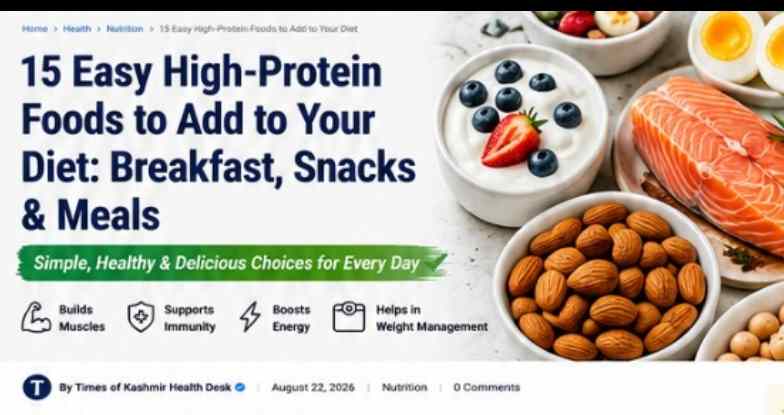
15 Easy High-Protein Foods to Add to Your Diet: Breakfast, Snacks & Meals
Looking for easy high-protein foods that fit into everyday meals? You don’t need expensive supplements or complicated meal plans. Eggs, chicken, Greek yogurt, fish, beans, lentils, tofu, nuts and several other everyday foods can help you add protein to breakfast, lunch, dinner and snacks.
Protein is an essential nutrient that helps the body build and maintain muscles, bones and skin. It is also involved in many important processes throughout the body. Protein comes from both animal and plant foods, so you can build a protein-rich eating pattern whether you eat meat, follow a vegetarian diet or prefer a combination of both.
How to Lose Belly Fat: A Science-Based Guide to a Slimmer, Healthier Waist
7 Signs Your Liver May Not Be Working Properly — Warning Changes You Shouldn’t Ignore
7 Signs Your Kidneys May Not Be Working Properly
10 Natural Ways to Help Lower Blood Pressure: Diet and Lifestyle Strategies
The U.S. Department of Agriculture’s MyPlate guidance recommends varying your protein choices, including seafood, lean meat and poultry, eggs, beans, peas, lentils, nuts, seeds and soy foods
In this guide, we’ll look at 15 easy high-protein foods, how to include them in your meals, affordable options, breakfast ideas, snack ideas and what to consider when choosing healthier protein sources.
ideas for protein: 15 Easy High-Protein Foods
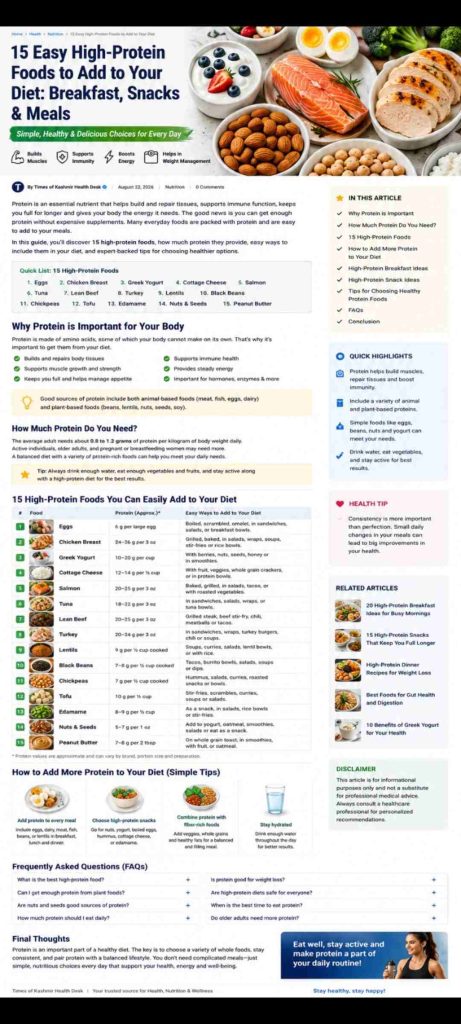
Here are 15 foods you can easily add to your diet:
- Eggs
- Chicken breast
- Greek yogurt
- Cottage cheese
- Salmon
- Tuna
- Lean beef
- Turkey
- Lentils
- Black beans
- Chickpeas
- Tofu
- Edamame
- Nuts and seeds
- Peanut butter
The amount of protein varies according to the food, brand, serving size and preparation method, so check the Nutrition Facts label when buying packaged foods.
Why Is Protein Important?
Protein is made from amino acids and is found throughout the human body.
Your body uses protein to help maintain and repair tissues, including muscles, skin and bones. Protein is also involved in enzymes, hormones and other important biological functions.
Protein is particularly important as part of an overall balanced diet.
However, more protein isn’t automatically better. The amount a person needs depends on factors such as age, body size, physical activity, health status and overall diet. MedlinePlus notes that protein needs vary according to individual circumstances. (
The goal should be to choose nutritious protein foods and combine them with vegetables, fruits, whole grains and other foods that fit your dietary needs.
20 High-Protein Vegetarian Foods to Add to Your Diet
15 Best High-Protein Foods to Add to Your Diet
1. Eggs
Eggs are one of the simplest protein foods to add to your routine.
One large egg provides about 6 grams of protein, although the exact nutrition can vary slightly by egg size.
Eggs are particularly convenient for breakfast because they can be prepared in several ways.
Easy ways to eat eggs
- Scrambled eggs with vegetables
- Hard-boiled eggs
- Omelet with spinach and mushrooms
- Egg sandwich
- Eggs with whole-grain toast
- Breakfast burrito
- Egg and vegetable bowl
Easy breakfast idea
Try two eggs with sautéed vegetables and whole-grain toast for a simple breakfast.
2. Chicken Breast
Chicken breast is a popular lean protein choice and is easy to use in many different meals.
USDA MyPlate recommends choosing lean or low-fat meat and poultry options, including skinless chicken breast.
Easy chicken meals
- Grilled chicken salad
- Chicken and brown rice
- Chicken wrap
- Chicken soup
- Chicken tacos
- Chicken and roasted vegetables
- Chicken grain bowl
Instead of deep-frying chicken, consider grilling, baking, roasting or broiling.
The 2025–2030 Dietary Guidelines information published by MedlinePlus also recommends lean protein choices and cooking methods such as grilling, roasting, poaching or broiling. (
3. Greek Yogurt
Greek yogurt is an easy breakfast or snack option.
Protein amounts can differ substantially between products, so check the Nutrition Facts label.
For a simple high-protein snack, combine plain Greek yogurt with:
- Blueberries
- Strawberries
- Banana
- Chia seeds
- Walnuts
- Almonds
- Oats
If you’re trying to reduce added sugar, compare labels and consider plain or lower-sugar varieties.
Quick ideas for protein
Greek yogurt + berries + chia seeds + a small portion of nuts
That’s a simple combination for breakfast or an afternoon snack.
4. Cottage Cheese
Cottage cheese can be another convenient source of protein.
It works particularly well for people who want something that requires almost no cooking.
Sweet option
Combine cottage cheese with:
- Berries
- Peaches
- Apples
- Pineapple
Savory option
Try it with:
- Tomato
- Cucumber
- Black pepper
- Herbs
- Whole-grain crackers
Check the Nutrition Facts label because sodium levels can vary between cottage cheese products.
5. Salmon
Salmon provides protein and is also a source of omega-3 fatty acids.
USDA MyPlate specifically includes seafood among recommended protein choices and highlights salmon and trout as seafood options that provide beneficial nutrients. (MyPlate)
Easy salmon meals
- Baked salmon with vegetables
- Salmon and rice bowl
- Salmon salad
- Salmon tacos
- Salmon with roasted potatoes
- Salmon and quinoa
Simple preparation
Season salmon with lemon, garlic, black pepper and herbs, then bake until properly cooked.
6. Tuna
Canned tuna is one of the most convenient protein foods because it can be stored in the pantry and used quickly.
You can add tuna to:
- Whole-grain sandwiches
- Salads
- Wraps
- Grain bowls
- Pasta salads
Simple tuna meal
Mix tuna with vegetables and a suitable dressing, then serve it over greens or with whole-grain bread.
When choosing canned or packaged tuna, compare sodium levels and follow current seafood guidance regarding variety and mercury exposure.
7. Lean Beef
Lean beef provides protein along with nutrients such as iron and vitamin B12.
Examples of leaner cuts include:
- Sirloin
- Tenderloin
- Round cuts
The 2025–2030 Dietary Guidelines information recommends choosing leaner meats and limiting foods high in saturated fat
Easy meals
- Lean beef stir-fry
- Beef and vegetable bowl
- Beef tacos
- Homemade chili
- Steak with vegetables
- Beef and bean bowl
The key is not necessarily to eliminate beef, but to consider the cut, portion and overall eating pattern.
8. Turkey
Turkey is another versatile protein food.
Skinless turkey breast is a relatively lean option.
Easy turkey meals
- Turkey sandwich
- Turkey wrap
- Turkey burger
- Ground turkey tacos
- Turkey chili
- Turkey and vegetable bowl
If you regularly eat deli turkey or other processed turkey products, check the sodium content on the label.
9. Lentils
Lentils are one of the best foods to consider if you want a plant-based protein source.
They also provide dietary fiber.
Lentils can be inexpensive, easy to store and extremely versatile.
Ways to eat lentils
- Lentil soup
- Lentil curry
- Lentil salad
- Lentil bowls
- Lentil and vegetable stew
- Lentil tacos
USDA’s Protein Foods group includes lentils along with beans and peas.
Easy meal
Combine cooked lentils with brown rice, roasted vegetables and a simple dressing.
10. Black Beans
Black beans provide both protein and fiber and can be used in many meals.
Canned black beans are particularly convenient.
Try black beans in:
- Burrito bowls
- Tacos
- Chili
- Salads
- Soups
- Rice bowls
If you’re buying canned beans, consider rinsing them and choosing lower-sodium products when available.
Quick meal
Black beans + brown rice + avocado + tomatoes + lettuce
This can become a simple, filling lunch.
11. Chickpeas
Chickpeas, also called garbanzo beans, are another versatile plant-based protein.
They work particularly well in Mediterranean-style meals and salads.
Easy ways to eat chickpeas
- Hummus
- Chickpea salad
- Roasted chickpeas
- Chickpea curry
- Chickpea soup
- Grain bowls
USDA includes chickpeas within the beans, peas and lentils portion of the Protein Foods group. (MyPlate)
Snack idea
Roast chickpeas with herbs and spices for a crunchy snack.
12. Tofu
Tofu is made from soy and can be a useful protein option for vegetarian and plant-based diets.
It has a mild flavor, which means it can absorb the flavor of sauces and spices.
Easy tofu meals
- Crispy baked tofu
- Vegetable tofu stir-fry
- Tofu scramble
- Tofu curry
- Tofu tacos
- Tofu rice bowl
USDA includes tofu and other soy products among the Protein Foods group
Beginner tip
If you’ve never cooked tofu before, try pressing it, cutting it into cubes, seasoning it and baking or pan-searing it until lightly crisp.
13. Edamame
Edamame is another soy-based protein food.
Frozen edamame is especially convenient because it can be prepared quickly.
Add edamame to:
- Salads
- Rice bowls
- Stir-fries
- Noodle dishes
- Soups
- Snack plates
You can also eat prepared edamame as a simple snack.
14. Nuts and Seeds
Nuts and seeds provide protein along with unsaturated fats and other nutrients.
Good choices include:
- Almonds
- Walnuts
- Pistachios
- Peanuts
- Pumpkin seeds
- Sunflower seeds
- Chia seeds
- Flaxseeds
USDA recommends varying protein foods and includes nuts and seeds among protein choice)
Easy ways to use them
Add a small serving to:
- Oatmeal
- Greek yogurt
- Salads
- Smoothies
- Whole-grain cereal
- Fruit
Important point
Nuts and seeds are nutritious but relatively calorie-dense, so portion size matters.
15. Peanut Butter
Peanut butter is an easy pantry staple that can add protein to snacks and meals.
Try it with:
- Whole-grain toast
- Apples
- Bananas
- Oatmeal
- Smoothies
- Greek yogurt
USDA counts 1 tablespoon of peanut butter as an ounce-equivalent within the Protein Foods group.
When shopping, compare labels for added sugar, sodium and other ingredients.
High-Protein Foods: Quick Comparison
| Food | Approximate protein* | Easy way to use it |
|---|---|---|
| Eggs | ~6 g per large egg | Breakfast, sandwiches |
| Chicken breast | ~24–26 g per 3 oz cooked | Salads, bowls, dinner |
| Greek yogurt | Varies by brand | Breakfast, snack |
| Cottage cheese | Varies by brand | Snack, breakfast |
| Salmon | ~20–25 g per 3 oz | Dinner, bowls |
| Tuna | Varies by product | Salad, sandwich |
| Lean beef | ~20–25 g per 3 oz | Tacos, stir-fry |
| Turkey | ~20–25 g per 3 oz | Sandwiches, dinner |
| Lentils | ~9 g per ½ cup cooked | Soup, bowls |
| Black beans | ~7–8 g per ½ cup cooked | Tacos, chili |
| Chickpeas | ~7 g per ½ cup cooked | Hummus, salads |
| Tofu | Varies by type | Stir-fry, bowls |
| Edamame | ~8–9 g per ½ cup | Snacks, bowls |
| Nuts & seeds | ~5–7 g per ounce | Snacks, oatmeal |
| Peanut butter | ~7–8 g per 2 tbsp | Toast, oatmeal |
*Protein amounts are approximate. Actual amounts vary according to brand, variety, serving size and preparation.
What Is the Best High-Protein Food?
There isn’t one food that is best for everyone.
A better strategy is to vary your protein sources.
For example, one week could include:
Breakfast: Eggs and Greek yogurt
Lunch: Chicken and beans
Snack: Nuts and fruit
Dinner: Salmon with vegetables
Another person might prefer:
Breakfast: Tofu scramble
Lunch: Lentil bowl
Snack: Edamame
Dinner: Bean and vegetable chili
Both approaches can provide protein.
USDA specifically recommends varying protein choices rather than relying on only one type of food. (MyPlate)
High-Protein Breakfast Ideas
Breakfast is an easy place to increase protein.
Option 1: Eggs and Toast
- 2 eggs
- Whole-grain toast
- Vegetables
- Fruit
Option 2: Greek Yogurt Bowl
- Greek yogurt
- Blueberries
- Chia seeds
- Walnuts
- Oats
Option 3: Protein Oatmeal
- Oatmeal
- Peanut butter
- Banana
- Chia seeds
Option 4: Breakfast Burrito
- Eggs
- Black beans
- Vegetables
- Whole-grain tortilla
Option 5: Cottage Cheese Bowl
- Cottage cheese
- Berries
- Nuts
- Cinnamon
High-Protein Snack Ideas
You don’t necessarily need a protein bar or shake for a protein-containing snack.
Try:
Greek yogurt + berries
Simple and requires almost no preparation.
Apple + peanut butter
A classic combination of fruit and nut butter.
Boiled eggs
Convenient for meal prep.
Edamame
Easy to prepare from frozen.
Cottage cheese + fruit
A simple sweet-and-savory option.
Hummus + vegetables
Pair hummus with carrots, cucumber or other vegetables.
Nuts + fruit
Keep the nut portion moderate because nuts are calorie-dense.
Cheap High-Protein Foods
Eating more protein does not have to mean spending a lot of money.
Some budget-friendly choices include:
Eggs
Affordable, versatile and easy to prepare.
Beans
Dried or canned beans can work in soups, salads and main dishes.
Lentils
A low-cost option for soups, curries and bowls.
Peanut butter
Useful for breakfast and snacks.
Canned tuna
Convenient and shelf-stable.
Chickpeas
Useful in salads, hummus and meals.
Tofu
Can be a relatively affordable alternative to meat depending on where you shop.
Plant-Based High-Protein Foods
You don’t have to eat meat to include protein in your diet.
Plant-based options include:
- Lentils
- Black beans
- Chickpeas
- Edamame
- Tofu
- Tempeh
- Peanuts
- Almonds
- Seeds
- Nut butters
MedlinePlus notes that people can obtain protein from plant sources such as soy, beans, legumes, nut butters and some grains. (MedlinePlus)
A varied plant-based diet can provide the amino acids your body needs.
High-Protein Foods for Healthy Eating
A common mistake is to focus only on the number of grams of protein.
The quality of the overall food matters too.
For example, a highly processed meat product may contain protein but also considerable sodium and saturated fat.
USDA recommends choosing leaner meats and poultry, varying protein sources, including seafood, and incorporating beans, peas, lentils, nuts, seeds and soy foods. (MyPlate)
A better approach is:
Protein + vegetables + fruit + whole grains + healthy fats
rather than simply trying to maximize protein.
How to Add More Protein Without Changing Your Whole Diet
You don’t need a completely new meal plan.
Start with small changes.
At breakfast
Add:
Eggs or Greek yogurt
At lunch
Add:
Chicken, tuna, beans or lentils
At dinner
Add:
Fish, lean poultry, tofu or beans
At snack time
Choose:
Greek yogurt, nuts, edamame, cottage cheese or peanut butter with fruit
Small changes can make it easier to build a consistent eating routine.
Should You Take Protein Powder?
Not necessarily.
Protein powders can be convenient, especially for people who have difficulty getting enough protein from regular food, but they are not required for everyone.
Many ordinary foods provide protein, including eggs, seafood, poultry, dairy, beans, lentils, tofu, nuts and seeds.
If you’re considering a protein supplement because of a medical condition, pregnancy, athletic training or a specific dietary goal, discuss your needs with a qualified healthcare professional.
How Much Protein Do You Need?
Protein needs are individual.
They can depend on:
- Age
- Body size
- Activity level
- Pregnancy or breastfeeding
- Overall calorie intake
- Health conditions
- Fitness goals
MedlinePlus notes that healthy adults generally need protein as part of their daily diet, with individual needs varying according to factors such as age, health and physical activity. (MedlinePlus)
Don’t assume that a very high-protein diet is appropriate for you simply because it is popular online.
If you have kidney disease or another medical condition that affects your diet, ask your healthcare professional about your individual protein needs.
How to Lose Belly Fat: A Science-Based Guide to a Slimmer, Healthier Waist
8 Foods That Support a Healthy Liver Naturally: Science-Backed Diet Tips
7 Simple Rules for Choosing Better Protein Foods
1. Vary your protein sources
Don’t rely on chicken or eggs every day.
Include fish, beans, lentils, nuts, seeds, soy and other options.
2. Choose leaner meats more often
Skinless chicken and turkey and leaner cuts of beef can help reduce saturated fat compared with fattier options
3. Eat seafood regularly
USDA recommends including seafood as part of the Protein Foods group.
4. Include plant proteins
Beans, peas, lentils, tofu, nuts and seeds can all contribute protein.
5. Check food labels
Look at:
- Protein
- Added sugar
- Sodium
- Saturated fat
- Serving size
6. Don’t forget fiber
Beans, lentils, chickpeas, nuts and seeds can provide protein along with other nutrients, including fiber.
7. Think about the whole meal
A nutritious meal doesn’t need to contain protein alone.
Combine protein with vegetables, fruit and appropriate whole-grain or other carbohydrate foods.
Frequently Asked Questions
What are the easiest high-protein foods to eat?
Eggs, Greek yogurt, cottage cheese, canned tuna, chicken, beans, lentils, tofu, edamame, nuts and peanut butter are all convenient options.
What is a good high-protein breakfast?
Eggs, Greek yogurt, cottage cheese, oatmeal with peanut butter, or eggs with beans can all be used to create a protein-containing breakfast.
What are the best plant-based protein foods?
Lentils, beans, chickpeas, tofu, edamame, tempeh, nuts, seeds and nut butters are useful plant-based protein options. (
Are eggs high in protein?
Yes. One large egg provides approximately 6 grams of protein.
Are beans a good source of protein?
Yes. Beans provide protein and fiber and can be used in salads, soups, chili, tacos and bowls.
Is Greek yogurt a good protein source?
Many Greek yogurt products contain substantial protein, but the amount varies by brand. Check the Nutrition Facts label.
Can I get enough protein without eating meat?
Yes. Plant foods such as beans, lentils, tofu, edamame, nuts and seeds can contribute protein to a vegetarian or plant-based diet.
Are nuts high in protein?
Nuts contain protein, but they also contain significant amounts of fat and calories. They can be nutritious in moderate portions.
Does eating more protein automatically help with weight loss?
No. Protein can be part of a healthy eating pattern, but weight management depends on the overall diet, energy intake, physical activity and individual factors. Protein should not be presented as a guaranteed weight-loss solution.
Is a high-protein diet safe for everyone?
Not necessarily. Individual dietary needs differ. People with certain health conditions may require specific advice from a healthcare professional.
Final Takeaway
Adding more protein to your diet doesn’t have to be complicated.
You can start with foods you already know:
Eggs. Chicken. Greek yogurt. Salmon. Tuna. Beans. Lentils. Tofu. Nuts. Seeds.
Try adding one protein-rich food to each major meal and choose different protein sources throughout the week.
The USDA’s MyPlate guidance emphasizes variety across seafood, lean meat and poultry, eggs, beans, peas, lentils, nuts, seeds and soy foods rather than relying on a single protein source.
The most important goal isn’t simply to eat more protein. It’s to build a balanced eating pattern that provides protein along with vegetables, fruits, whole grains and other nutritious foods.
That gives you a proper protein → nutrition → gut health → recipes content cluster instead of one isolated article.
Health-content note: This article is general educational information, not personalized medical advice. For people with kidney disease or other conditions requiring dietary restrictions, protein intake should be discussed with a qualified healthcare professional. MedlinePlus similarly advises using health information as general guidance rather than a substitute for professional care.
Frequently Asked Questions About High-Protein Foods
What are the best high-protein foods?
Some good high-protein choices include eggs, chicken, fish, Greek yogurt, cottage cheese, lean beef, turkey, lentils, beans, chickpeas, tofu, edamame, nuts and seeds.
What is the easiest high-protein food to eat?
Eggs, Greek yogurt, cottage cheese, canned tuna, edamame and nuts are convenient options because they require little preparation.
What are the best high-protein foods for breakfast?
Eggs, Greek yogurt, cottage cheese, peanut butter, eggs with beans and oatmeal topped with nuts or seeds can all be included in a protein-rich breakfast.
What are some cheap high-protein foods?
Eggs, lentils, beans, chickpeas, peanut butter and canned tuna can be relatively affordable protein choices.
Can you get enough protein without eating meat?
Yes. Beans, lentils, chickpeas, tofu, edamame, nuts, seeds and other plant foods can contribute protein to a vegetarian or plant-based diet.
Are eggs a good source of protein?
Yes. One large egg contains approximately 6 grams of protein, although the exact amount can vary slightly by egg size.
Is Greek yogurt high in protein?
Many Greek yogurt products are relatively high in protein, but the amount varies by brand and serving size. Check the Nutrition Facts label.
Are beans high in protein?
Yes. Beans provide protein as well as dietary fiber and can be used in soups, salads, tacos, chili and rice bowls.
What are good high-protein snacks?
Greek yogurt with berries, boiled eggs, cottage cheese, edamame, nuts, hummus with vegetables and apple with peanut butter are easy options.
Does eating more protein help with weight loss?
Protein can be part of a healthy eating pattern and may help with fullness, but eating more protein alone does not guarantee weight loss. Overall food intake, physical activity and individual factors also matter.
How much protein should I eat each day?
Protein needs vary depending on factors such as age, body size, activity level, health and overall diet. There is no single amount that is appropriate for everyone.
Is a high-protein diet healthy for everyone?
Not necessarily. People with certain medical conditions may have specific protein requirements. Anyone with a condition affecting their diet should discuss their individual needs with a qualified healthcare professional.