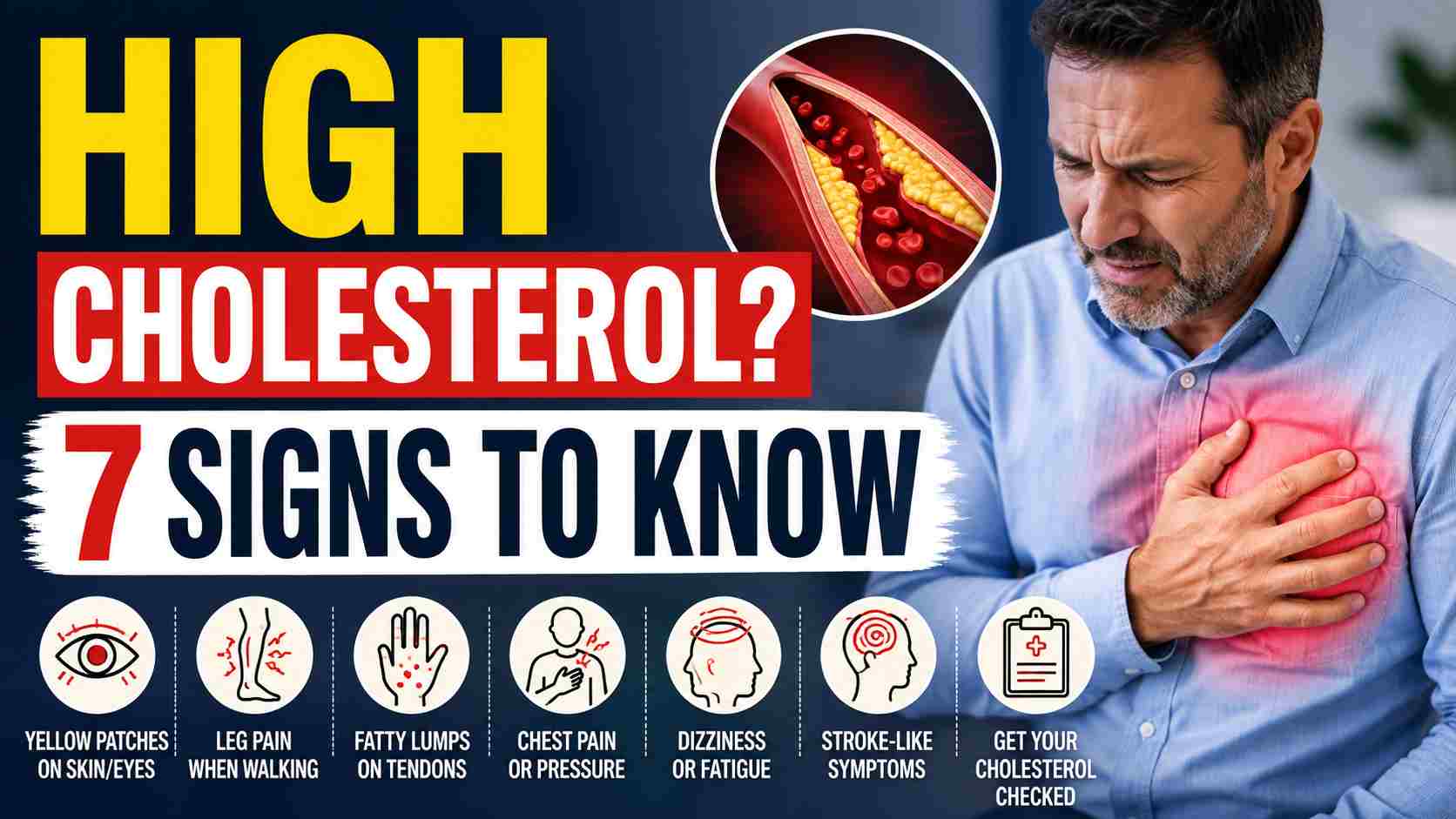
Signs Your Cholesterol May Be Too High:
High cholesterol is often described as a “silent” condition because it usually causes no noticeable symptoms. A person can have elevated cholesterol for years without feeling sick or seeing any obvious physical changes.
The most reliable way to find out whether your cholesterol is high is through a blood test called a lipid panel. Physical signs, when they occur, are uncommon and may be associated with very high cholesterol, inherited cholesterol disorders, or complications affecting the arteries.
Physical Signs That Can Sometimes Be Associated With Very High Cholesterol
Certain visible changes involving the skin, eyes, and tendons can occur in people with significantly elevated cholesterol, particularly in some inherited conditions.
10 Warning Signs of Vitamin Deficiency Your Body Might Be Sending You
Can Fatty Liver Be Reversed? What You Should Know
Does Rosemary Oil Really Help Hair Growth? What Research Says
1. Xanthomas
Xanthomas are firm, yellowish deposits that develop under the skin because of accumulated cholesterol and other fatty substances.
They may occur around the:
- Elbows
- Knees
- Hands
- Feet
- Buttocks
Their presence can sometimes indicate an underlying lipid disorder and should be evaluated by a healthcare professional.
2. Tendon Xanthomas
Tendon xanthomas are cholesterol deposits that develop within or around tendons. They are particularly associated with familial hypercholesterolemia (FH), an inherited condition that can cause very high LDL cholesterol.
They commonly affect the Achilles tendons and tendons in the hands.
Because familial hypercholesterolemia can substantially increase the risk of premature cardiovascular disease, these findings deserve medical evaluation.
3. Xanthelasma
Xanthelasma appears as yellowish patches or plaques around the eyelids.
Although xanthelasma can occur in people with normal cholesterol levels, it may sometimes be associated with abnormal blood lipid levels or other cardiovascular risk factors.
If these patches develop, a healthcare professional may recommend checking cholesterol and other cardiovascular risk factors.
4. Corneal Arcus
Corneal arcus is a gray, white, or bluish ring around the outer edge of the cornea.
It is common with aging and is often harmless in older adults. However, when it appears at an unusually young age, it can sometimes be associated with high cholesterol or an inherited lipid disorder.
Corneal arcus alone does not diagnose high cholesterol, so blood testing is still necessary.
Warning Signs of Cholesterol-Related Artery Disease
Although high cholesterol itself usually causes no symptoms, LDL cholesterol can contribute to the buildup of plaque inside arteries over time.
This process, called atherosclerosis, can narrow arteries and reduce blood flow. The symptoms that follow depend on which arteries are affected.
5. Leg Pain During Walking
When plaque reduces blood flow to the legs, it can contribute to peripheral artery disease (PAD).
A common symptom is claudication—pain, cramping, aching, or heaviness in the calves, thighs, or hips that develops during walking or exercise and improves after resting.
Other possible symptoms include:
- Coldness in the lower leg or foot
- Numbness or weakness
- Slow-healing sores on the feet or legs
- Changes in skin appearance
- Reduced hair growth on the legs
- Slow-growing or brittle toenails
These symptoms can have other causes, so medical assessment is important.
6. Chest Pain or Pressure
Plaque buildup in the coronary arteries can restrict blood flow to the heart and contribute to coronary artery disease.
A possible symptom is angina, which may feel like:
- Pressure or tightness in the chest
- Squeezing or fullness
- Discomfort during physical activity
- Pain that may spread to the arm, shoulder, neck, jaw, or back
Chest discomfort can have many causes, but new, severe, or unexplained chest pain should never be ignored.
7. Stroke or TIA Warning Signs
Atherosclerosis can also affect arteries supplying the brain.
A transient ischemic attack (TIA) or stroke may cause sudden:
- Numbness or weakness, particularly on one side of the body
- Facial drooping
- Difficulty speaking or understanding speech
- Sudden vision problems
- Loss of balance or coordination
- Severe dizziness
- Sudden severe headache
These symptoms require immediate medical attention, even if they disappear after a few minutes. A TIA can be a warning that a major stroke could occur later.
When to Seek Emergency Medical Care
Do not wait for a cholesterol test if you experience symptoms that could indicate a heart attack or stroke.
Seek emergency medical care immediately for symptoms such as:
- Severe or persistent chest pressure or pain
- Chest discomfort accompanied by sweating, nausea, or shortness of breath
- Sudden weakness or numbness on one side of the body
- Sudden facial drooping
- Sudden difficulty speaking or understanding speech
- Sudden loss of vision
- Sudden severe dizziness or loss of balance
The symptoms above can have several causes, but some are medical emergencies.
How Is High Cholesterol Diagnosed?
Because high cholesterol usually doesn’t produce symptoms, blood testing is the most reliable way to detect it.
A test called a lipid panel or lipid profile generally measures:
| Test | What It Measures |
|---|---|
| Total cholesterol | The overall amount of cholesterol in the blood |
| LDL cholesterol | A major contributor to plaque buildup |
| HDL cholesterol | Helps transport cholesterol in the bloodstream |
| Triglycerides | A type of fat in the blood |
There is no single LDL number that is ideal for every person. Recommended cholesterol levels and treatment goals depend on factors such as cardiovascular disease, diabetes, age, family history, and overall cardiovascular risk.
For this reason, your healthcare professional should interpret your results in the context of your individual health.
How Often Should You Check Your Cholesterol?
Many healthy adults should have their cholesterol checked periodically, often every 4 to 6 years, although the appropriate interval varies.
You may need testing more frequently if you have risk factors such as:
- Diabetes
- High blood pressure
- A family history of high cholesterol or early heart disease
- Previous heart disease or stroke
- Known high cholesterol
- An inherited cholesterol disorder
Children and adults with certain risk factors may also need earlier or more frequent screening.
How Can You Lower High Cholesterol?
If testing shows that your cholesterol is elevated, treatment may involve lifestyle changes, medication, or both.
Improve Your Diet
Focus on foods such as:
- Vegetables and fruits
- Whole grains
- Beans and lentils
- Nuts and seeds
- Fish
- Foods containing unsaturated fats
Try to limit foods high in saturated fat and avoid industrial trans fats.
Soluble fiber from foods such as oats, beans, lentils, and some fruits can also help improve LDL cholesterol.
Stay Physically Active
Adults are generally encouraged to get at least 150 minutes of moderate-intensity physical activity each week, along with muscle-strengthening activity on at least two days when appropriate.
Regular physical activity supports cardiovascular health and can help with weight management and other risk factors.
Maintain a Healthy Weight
If you have excess weight, even modest weight loss can improve several cardiovascular risk factors, including cholesterol and triglycerides.
Avoid Tobacco
Smoking damages blood vessels and increases cardiovascular risk. Quitting smoking is one of the most important steps you can take for heart health.
Take Medication When Prescribed
Lifestyle changes are important, but some people need medication to reduce their cardiovascular risk.
Depending on individual risk and cholesterol levels, healthcare professionals may prescribe medications such as:
- Statins
- Ezetimibe
- PCSK9 inhibitors
- Other cholesterol-lowering medications when appropriate
Never start, stop, or change cholesterol medication without discussing it with your healthcare professional.
The Bottom Line
High cholesterol usually has no obvious symptoms. That’s why waiting for physical warning signs is not a safe way to detect it.
Visible cholesterol deposits can occasionally occur, particularly in people with very high or inherited cholesterol disorders. Symptoms such as chest pain, leg pain during walking, or sudden neurological problems may indicate complications from artery disease rather than high cholesterol itself.
The best way to know your cholesterol levels is to have a lipid panel and discuss the results with a healthcare professional.
Early detection and appropriate treatment can help reduce the long-term risk of heart attack, stroke, and other cardiovascular complications.
This article is intended for general educational purposes and does not replace professional medical advice. If you experience symptoms that may indicate a heart attack or stroke, seek emergency medical care immediately.