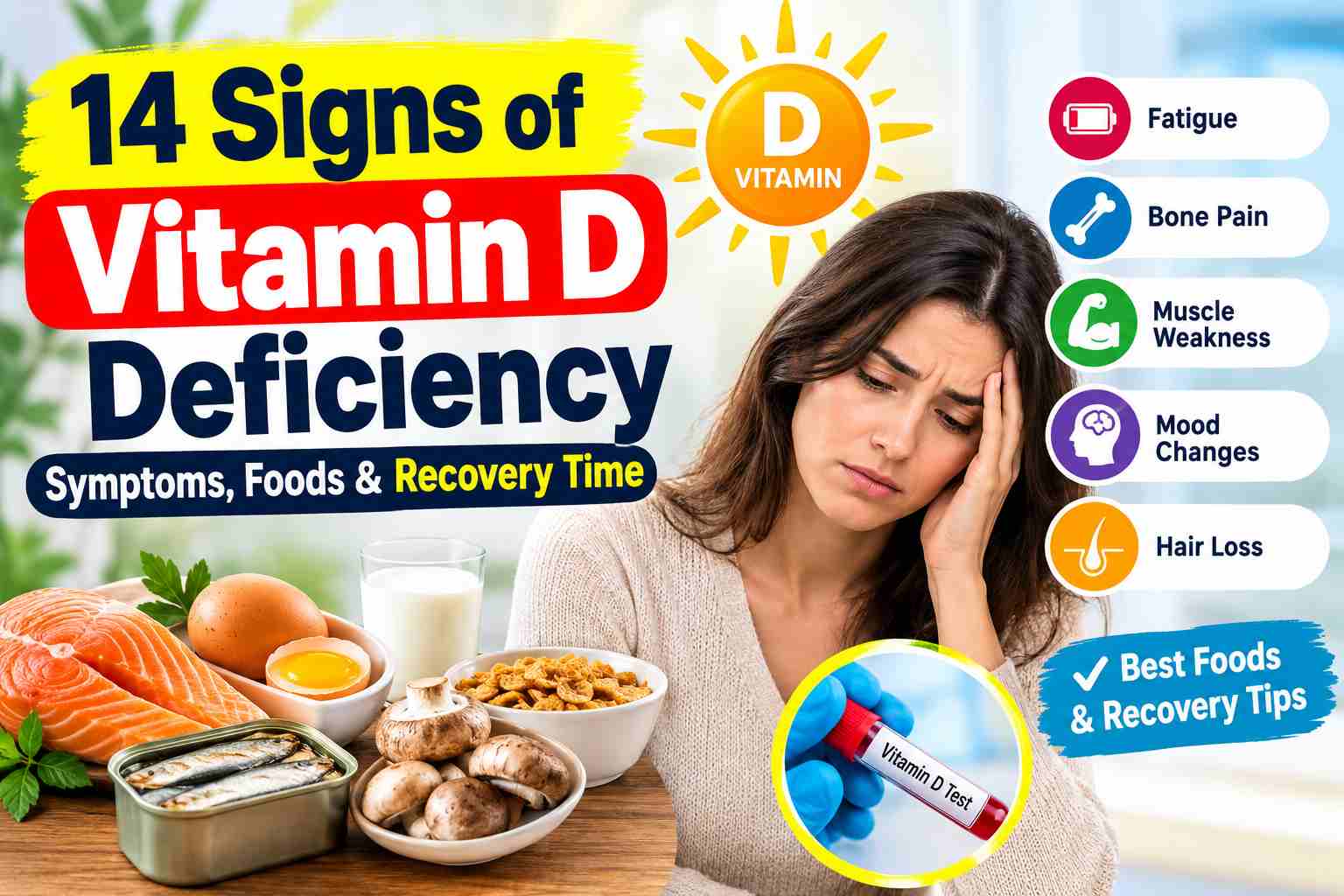
14 Signs of Vitamin D Deficiency: Vitamin D deficiency can develop without obvious warning signs. When symptoms do appear, they may be easy to mistake for stress, poor sleep, aging, nutritional problems or other health conditions.
Common concerns include fatigue, muscle weakness, bone pain and changes in mood. Severe deficiency can affect bone health and muscle function, while children can develop impaired bone mineralization.
This guide explains 14 possible signs of vitamin D deficiency, severe symptoms to watch for, symptoms that may affect women, foods containing vitamin D, how deficiency is diagnosed and how long recovery may take.
Medical disclaimer: This article is for informational purposes only and does not replace medical advice, diagnosis or treatment. If you suspect vitamin D deficiency, speak with a qualified healthcare professional and ask whether testing is appropriate.
What Is Vitamin D Deficiency?
Vitamin D helps the body absorb calcium and supports normal bone and muscle function. The body can produce vitamin D when skin is exposed to sunlight, and vitamin D is also obtained from certain foods and supplements.
A blood test measuring 25-hydroxyvitamin D [25(OH)D] is commonly used to assess vitamin D status.
According to the U.S. National Institutes of Health, levels below 12 ng/mL (30 nmol/L) are associated with deficiency, while levels from 12 to less than 20 ng/mL are generally considered inadequate for bone and overall health. Individual interpretation should be done by a healthcare professional.
Signs Your Cholesterol May Be Too High: What Your Body Can—and Can’t—Tell You
How to Lose Belly Fat: A Science-Based Guide to a Slimmer, Healthier Waist
8 Foods That Support a Healthy Liver Naturally: Science-Backed Diet Tips
10 Warning Signs of Vitamin Deficiency Your Body Might Be Sending You
14 Signs of Vitamin D Deficiency
Vitamin D deficiency does not cause the same symptoms in everyone. Some people have no obvious symptoms, while others develop problems involving their bones or muscles.
1. Persistent Fatigue
Feeling tired despite getting adequate sleep can have many causes, including anemia, thyroid problems, sleep disorders, stress and nutritional deficiencies. Low vitamin D status may also be present, particularly when fatigue occurs alongside other symptoms.
2. Bone Pain
Vitamin D is important for calcium absorption and normal bone mineralization. Significant deficiency can contribute to osteomalacia in adults, which may cause bone pain or tenderness.
Pain may be noticed in areas such as the back, hips, ribs or legs.
3. Muscle Weakness
Difficulty climbing stairs, getting up from a chair or performing activities that were previously easy can occur with severe vitamin D deficiency.
Muscle weakness is more medically significant than ordinary muscle soreness and deserves evaluation when persistent.
4. Muscle Aches and Pain
Some people with low vitamin D status report widespread muscle discomfort. However, muscle pain has many possible causes, so it should not automatically be attributed to vitamin D deficiency.
5. Frequent Falls or Reduced Physical Function
Severe deficiency may contribute to muscle weakness and impaired physical function, which can increase fall risk, particularly in older adults.
6. Bone Fractures
Long-term vitamin D deficiency can impair bone mineralization and contribute to weaker bones.
A fracture occurring after relatively minor trauma should be medically evaluated rather than assumed to be caused by vitamin D deficiency.
7. Slow Growth in Children
Children need adequate vitamin D for normal bone development.
Severe deficiency can cause rickets, a condition in which bones become soft and weak and normal skeletal growth can be affected.
8. Low Mood
Vitamin D receptors are found throughout the body, including the brain, and researchers have investigated possible relationships between vitamin D status and mood.
However, low mood or depression should not be diagnosed as a vitamin D deficiency based on symptoms alone.
9. Difficulty Performing Everyday Activities
When deficiency becomes severe enough to cause muscle weakness or bone pain, ordinary activities such as walking, climbing stairs or carrying objects may become more difficult.
10. Muscle Cramps or Spasms
Severe vitamin D deficiency can contribute to problems with calcium metabolism. In some circumstances, this may be associated with muscle cramps or spasms.
Sudden or severe muscle spasms require medical evaluation because there are many possible causes.
11. Hair Loss
Hair loss is frequently searched online as a possible vitamin D deficiency symptom.
Some studies have found associations between vitamin D status and certain hair-loss disorders, but this does not mean vitamin D deficiency is the cause of every case of hair loss.
If hair loss is sudden, severe or persistent, other causes should also be investigated.
12. Increased Bone Fragility
Vitamin D plays an important role in maintaining normal bone mineralization. Persistent deficiency can contribute to weakened bones, especially when calcium intake or absorption is also inadequate.
13. Poor Physical Performance
Muscle weakness associated with severe deficiency may make exercise and physical activity more difficult.
If your exercise capacity suddenly declines, don’t assume vitamin D is responsible. Heart, lung, thyroid, blood and other conditions can also cause reduced performance.
14. Symptoms With No Obvious Explanation
Some people search for vitamin D deficiency after experiencing a combination of fatigue, aches, weakness or other nonspecific symptoms.
These symptoms alone cannot diagnose deficiency. A blood test and appropriate medical assessment are more reliable than trying to diagnose yourself from a symptom list.
Severe Vitamin D Deficiency Symptoms
Severe vitamin D deficiency can be more serious than ordinary tiredness.
Possible consequences include:
- Significant bone pain
- Muscle weakness
- Difficulty walking or climbing stairs
- Muscle cramps or spasms in severe cases
- Increased risk of bone problems and fractures
- Osteomalacia in adults
- Rickets in children
Very low vitamin D levels can occur because of inadequate intake or sun exposure, problems absorbing nutrients, certain medical conditions or medications.
If symptoms are severe or worsening, medical evaluation is more important than simply starting high-dose supplements yourself.
Weird Symptoms of Vitamin D Deficiency: What Should You Believe?
Searches for “weird symptoms of vitamin D deficiency” often include symptoms such as sweating, tinnitus, weight gain, dental problems and sleep disturbances.
The problem is that many of these symptoms have weak or inconsistent evidence as direct signs of vitamin D deficiency.
For example, experiencing:
- Head sweating
- Ringing in the ears
- Weight gain
- Poor sleep
- Headaches
- Hair loss
does not mean you have vitamin D deficiency.
These symptoms can have dozens of other explanations.
The better approach is to look at the overall picture and, when appropriate, check vitamin D status with a healthcare professional rather than relying on unusual symptoms alone.
Low Vitamin D Symptoms in Females
Women can develop the same vitamin D deficiency symptoms as men, but bone health deserves particular attention.
Bone Health
Vitamin D is essential for calcium absorption and normal bone mineralization. Women become particularly vulnerable to bone loss after menopause because declining estrogen levels also affect bone density.
Pregnancy
Vitamin D requirements and supplementation during pregnancy should be discussed with a healthcare professional. Pregnancy is not a reason to take large doses of vitamin D without medical guidance.
Menopause
Women going through or after menopause may have increased osteoporosis risk. Maintaining adequate vitamin D and calcium, along with appropriate exercise and other preventive measures, is important for bone health.
Fatigue and Muscle Symptoms
Fatigue, muscle aches and weakness can occur with deficiency, but these symptoms are nonspecific. Conditions such as anemia, thyroid disorders, sleep problems and hormonal changes can cause similar symptoms.
Vitamin D Foods: What Should You Eat?
Only a limited number of foods naturally contain substantial amounts of vitamin D.
Good dietary sources include:
| Food | Vitamin D |
|---|---|
| Fatty fish such as salmon | One of the best natural sources |
| Trout and other oily fish | Good source |
| Sardines | Provides vitamin D |
| Egg yolks | Contains smaller amounts |
| UV-exposed mushrooms | Can provide vitamin D2 |
| Fortified milk | Amount varies by product |
| Fortified plant-based milk | Check the nutrition label |
| Fortified cereals | Amount varies |
Food amounts can vary considerably between brands and serving sizes, so check the nutrition label when available.
Sunlight and Vitamin D
The body can produce vitamin D when skin is exposed to ultraviolet B (UVB) radiation.
However, vitamin D production depends on factors such as:
- Season
- Latitude
- Time of day
- Skin pigmentation
- Age
- Clothing
- Sunscreen use
- Amount of exposed skin
More sunlight is not automatically better because excessive UV exposure increases skin-cancer risk.
How Is Vitamin D Deficiency Diagnosed?
Symptoms alone cannot reliably diagnose vitamin D deficiency.
A healthcare professional may recommend a blood test for 25-hydroxyvitamin D [25(OH)D] when testing is appropriate.
The result needs to be interpreted in context because vitamin D requirements and treatment decisions vary depending on age, health conditions, medications and other factors.
How Long Does It Take to Recover From Vitamin D Deficiency?
There is no single recovery time that applies to everyone.
How quickly vitamin D levels improve depends on:
- How low the starting level is
- The treatment prescribed
- Absorption of vitamin D
- Diet
- Underlying medical conditions
- Whether the cause of deficiency has been addressed
- Individual response to treatment
Some people may notice improvement in certain symptoms after treatment, while others may need considerably longer.
Bone health and muscle function may take longer to recover than blood vitamin D levels.
If your healthcare professional prescribes vitamin D, follow the recommended dose and arrange follow-up testing when advised.
Vitamin D2 vs. Vitamin D3
Vitamin D supplements are commonly available as vitamin D2 and vitamin D3.
Both can increase vitamin D levels, but evidence suggests vitamin D3 generally raises blood 25(OH)D more effectively than vitamin D2.
That does not mean everyone should take a high-dose vitamin D3 supplement. The appropriate product and dose depend on the individual situation.
Can Vitamin D Deficiency Really “Ruin Your Life”?
If you searched “vitamin D deficiency ruined my life,” you may be dealing with symptoms that have been difficult to explain.
Severe deficiency can cause genuine physical problems, particularly bone pain, muscle weakness and impaired bone mineralization.
But vitamin D deficiency should not automatically be blamed for every unexplained symptom.
Persistent fatigue, brain fog, depression, widespread pain or weakness can have many causes. Getting the right diagnosis is more useful than assuming one nutrient is responsible.
When Should You See a Doctor?
Speak with a healthcare professional if you have:
- Persistent or unexplained fatigue
- Significant bone pain
- Muscle weakness
- Repeated fractures
- Difficulty walking
- Severe muscle cramps or spasms
- Symptoms that are worsening
- Risk factors for vitamin D deficiency
Do not use extremely high doses of vitamin D without medical supervision. Excessive vitamin D can cause dangerously high calcium levels and other health problems.
Frequently Asked Questions
What are the first signs of vitamin D deficiency?
There is no single first symptom. Some people have no noticeable symptoms. Fatigue, muscle weakness and bone or muscle discomfort can occur, particularly when deficiency is significant.
What are severe vitamin D deficiency symptoms?
Severe deficiency can cause bone pain, muscle weakness, impaired bone mineralization, fractures and, in children, rickets.
What are low vitamin D symptoms in females?
Women can experience fatigue, muscle weakness and bone or muscle discomfort. Bone health is particularly important during and after menopause.
What are the best vitamin D foods?
Fatty fish, fortified milk and plant milks, fortified cereals, egg yolks and UV-exposed mushrooms are among the available dietary sources.
How long does vitamin D deficiency take to recover?
Recovery varies. Blood levels may improve over weeks to months depending on the severity and treatment, while recovery of bone and muscle problems can take longer.
Can vitamin D deficiency cause extreme tiredness?
Fatigue can occur in people with vitamin D deficiency, but it is not specific to vitamin D. Persistent extreme tiredness should be medically evaluated.
Can vitamin D deficiency cause hair loss?
Some research has found associations between vitamin D status and certain hair-loss conditions, but hair loss has many possible causes and should not automatically be attributed to vitamin D deficiency.
Can you diagnose vitamin D deficiency from symptoms?
No. Symptoms are nonspecific. When testing is appropriate, a 25-hydroxyvitamin D blood test is commonly used to assess vitamin D status.
Bottom Line
Vitamin D deficiency can affect bones and muscles, and severe deficiency can cause significant problems. But many symptoms commonly associated with low vitamin D—such as fatigue, hair loss, poor sleep and low mood—can have many other causes.
If you suspect a deficiency, don’t rely on a symptom checklist alone. Talk with a healthcare professional about whether a 25-hydroxyvitamin D blood test and further evaluation are appropriate.
Sources: National Institutes of Health Office of Dietary Supplements; Endocrine Society Clinical Practice Guideline.
Tags:
Vitamin D deficiency, vitamin D deficiency symptoms, vitamin D deficiency signs, severe vitamin D deficiency, low vitamin D symptoms female, weird symptoms of vitamin D deficiency, vitamin D foods, vitamin D deficiency recovery, vitamin D3, vitamin D test, vitamin D levels, vitamin D health